
When people are surprised about how much I travel, I have to remind them that I hardly ever pay for a place to stay when I go abroad. I like to pair travel with visiting friends. Making friends from around the world is a great way to learn about places you know nothing about and visit places you wouldn’t otherwise visit. Belgium was one of these places for me. It was never on my radar until my family hosted an exchange student from Flanders my senior year of high school. All I knew about Belgium is that it had waffles and Brussels. Little did I know 4 years later that Belgium would end up being my favorite country (besides Ireland obviously) that I have visited. Here I will tell you about my travels in Belgium and hopefully inspire you to visit this very under rated country!
Why?
You may be wondering why it is my second favorite country. Let me tell you. The people are some of the kindest and genuine people in the world. I describe Belgium to people as having a similar atmosphere to Ireland: hearty food, lots of beer, kind and funny people, and of course rainy weather. Everybody in Belgium feels real as in they don’t feel like they are trying to be somebody else or look a certain way. There is also not a specific Belgian look. Brussels is so international that as a white person you almost feel like the minority. Being somewhere so international as a traveler is really cool because you never have to worry about trying to fit in or looking like a tourist.
Now lets talk about the food. I will have to do a whole post dedicated to the food because I will never get over how good the waffles and fries are. There are so many places dedicated to each of those. You will never be able to look at waffles the same after having a Belgian waffle, I can promise you that. Belgium also has Frituur, which is a type of food place where you get as much fries as you heart desires, condiments on top of condiments, and any fried meat you can think of. I miss these places already.
Have I convinced you to love Belgium yet? Well then let me give you a little tour of Belgium then (and there will be some humor along the way.)
Brussels
Lets start with Brussels because it wasn’t only the first place I visited in Belgium, but also the most well know city in Belgium. I ended up going to Brussels twice. The first time to visit to meet the prime minister (which I might have to just make a story time post about) and the the second time on my own to do a bit more exploring. Here are some of the very cool places in Brussels.
Grand Place (Grote Markt)
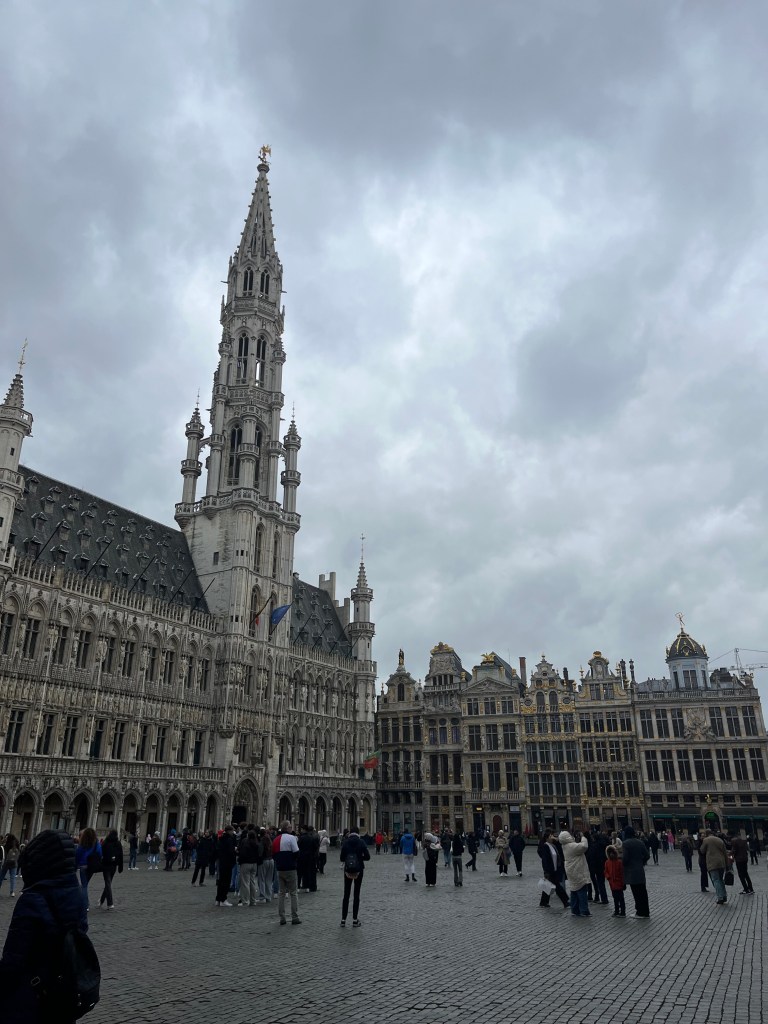
Grand Place is the main square of Brussels. Sadly I visited on a rainy day and was not able to capture the entirety of this squares beauty. Many of the surrounding elegant baroque buildings date back to the 17th century while the Gothic town hall was built in the 15th century. I would say it is the most beautiful square I have visited in Europe. While you can visit the plaza for free, you can buy tickets to have a guided tour of the inside of the town hall. You can also visit the Duke’s building right across from the town hall that houses the Museum of the City of Brussels. Then of course there is the Beer museum in the basement of the guild house of the brewers, which is easy to spot on the square, but I struggled to find the entrance to buy a ticket. Either way, whether you feel like touring some historic buildings and visiting some museums or just witnessing the beauty of Belgium, Grand Place in the place to go.

The Royal Palace of Brussels
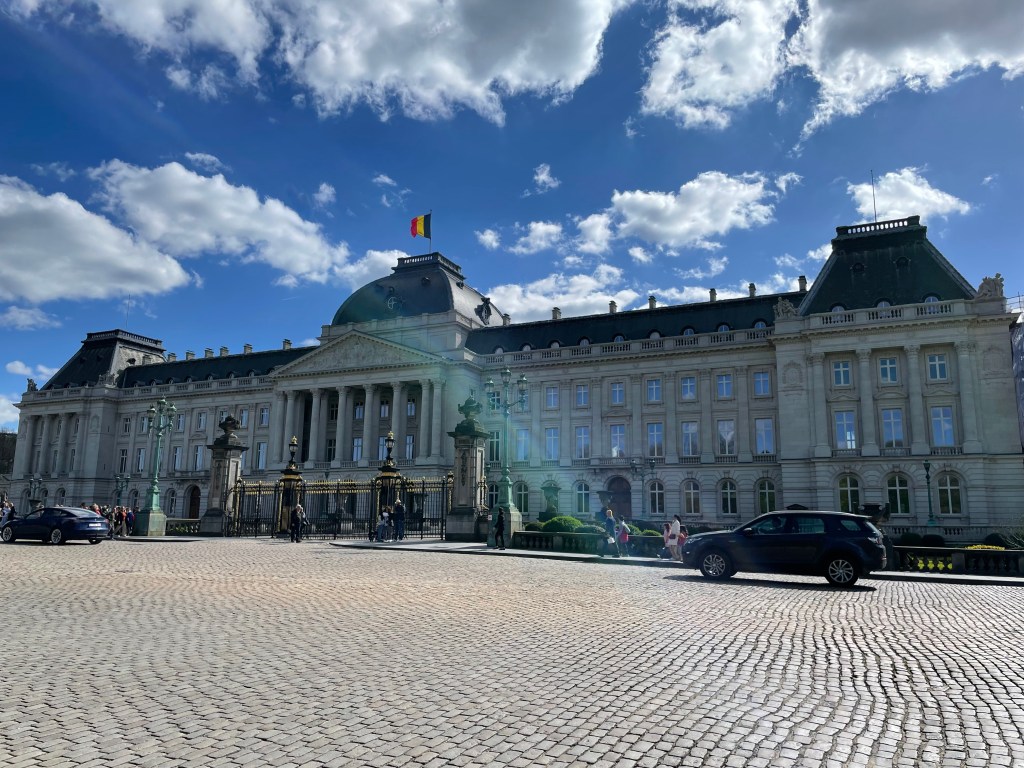
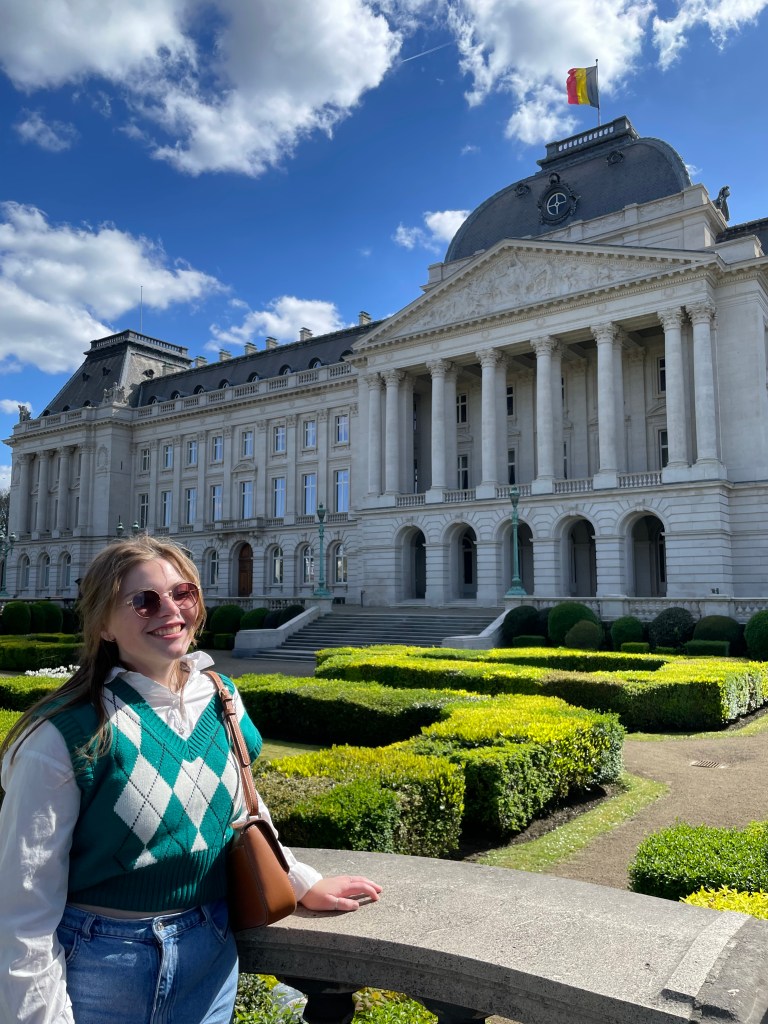
The Royal Palace of Brussels is the workplace of King Philippe of Belgium. It solely serves the purpose of work as the royal family no longer resides in the palace. When I visited last April I was unable to go inside and the building is currently under renovations, so you still are unable to tour the inside of the palace, but normally the palace allows visitors in the busy months from July to September.
Manneken Pis
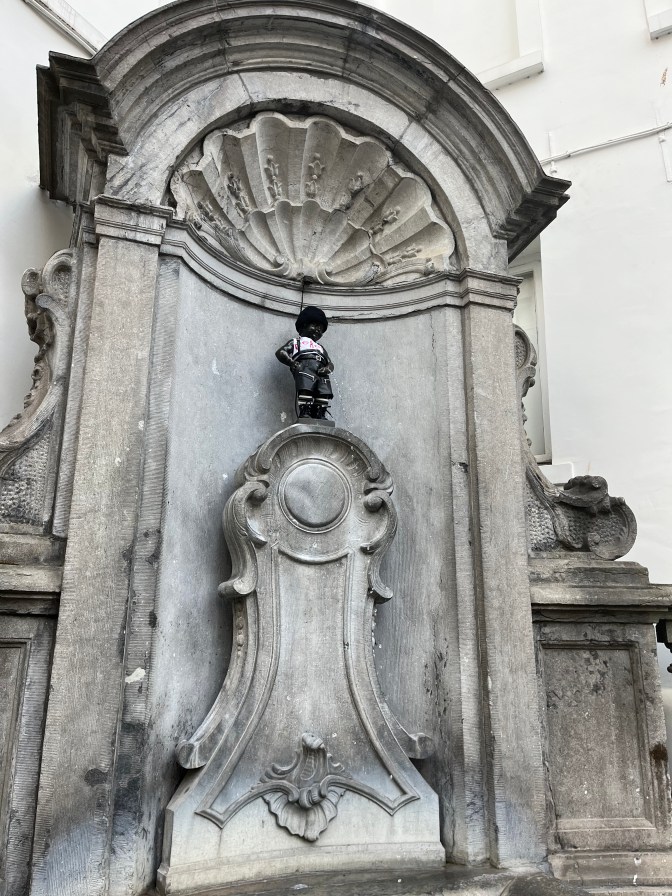
I love to tell people that the first thing that the Prime Minister told me to visit in Belgium when I met him was Manneken Pis. The statue was built in the 17th century and it is quite literally a little bronze boy peeing into a basin. It is now a well known symbol in Belgium and a big part of the culture with its surrounding legends and rotating outfits.
Mount of the Arts (Monts des Arts)
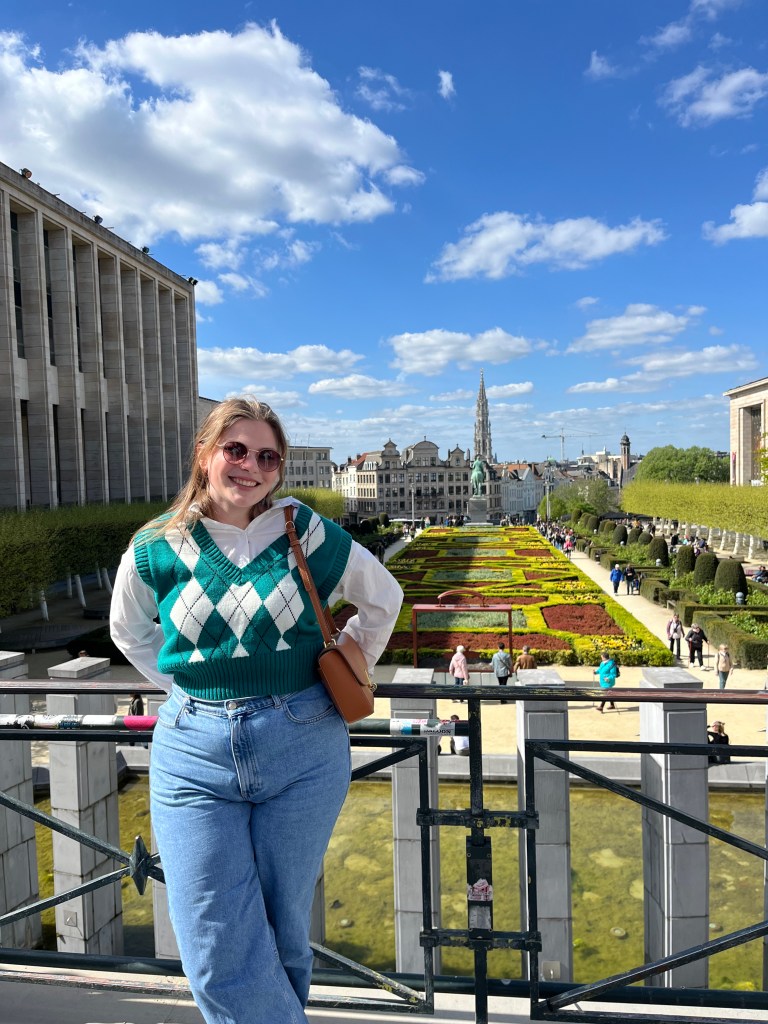
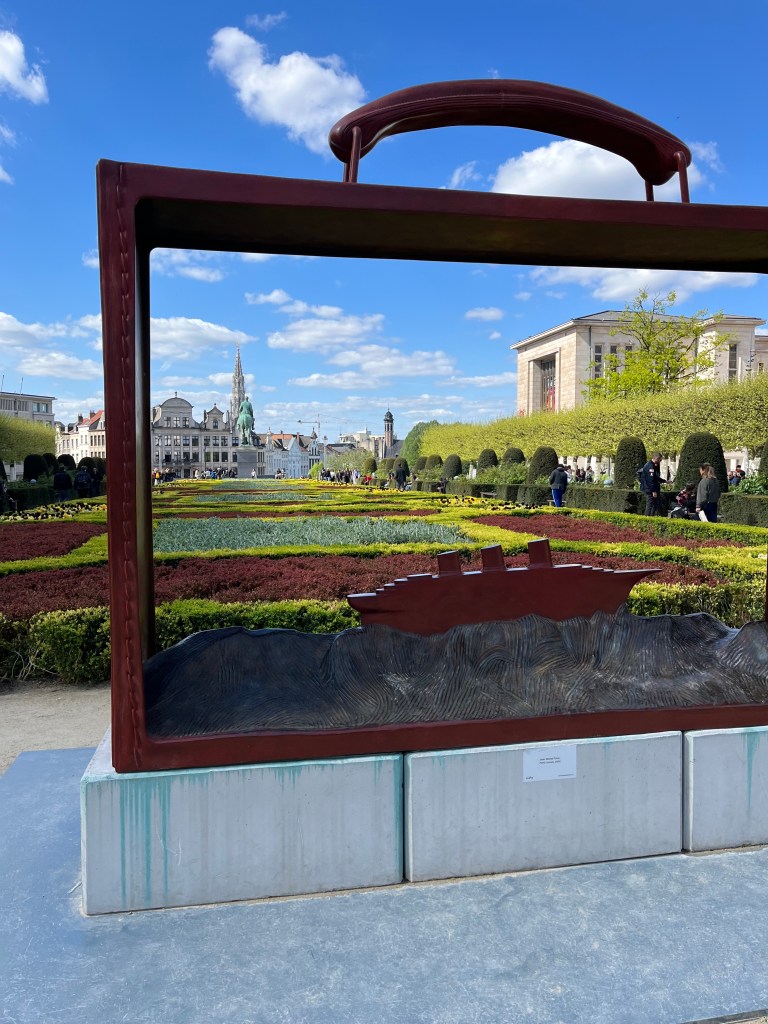
This square in the space between the upper part of the city, the Royal Quarter, and the lower part of the city, Grand Place. The entirety of it includes not only these beautiful gardens, but also the Royal Library, the National Archives of Belgium, and other museums. I didn’t have a chance to go into any of these buildings as I was waiting for my meeting with the prime minister, but the walk through this picturesque park was still worth the stop.
Atomium
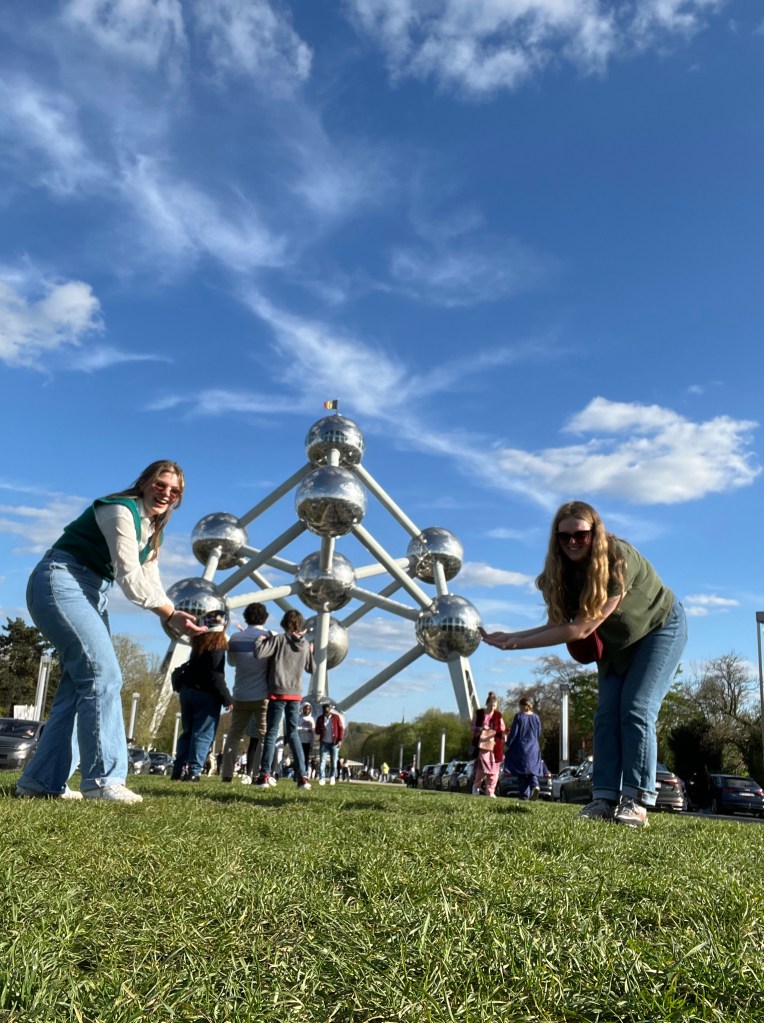
The Atomium was a stop I was a little hesitant about. I had no idea what to expect. It is a sculpture that was built for the Brussels World’s Fair in 1958. Now it is not only a great photo op but it is also a symbol of Brussels internationalism. You can purchase a ticket to go inside to see the interior architecture or to visit one of its exhibitions dedicated to Belgium and the digital arts. You also can find a panoramic view of the city inside. I didn’t go inside as I had a lot to see and do in Belgium, but that shouldn’t stop you from experiencing the fullness of the Atomium. If you don’t want to spend the money to go inside, you can still just walk around the surrounding park and experience the internationalism of Belgium while people watching. Overall it is a 10/10 experience.


St. Michael and St. Gudula Cathedral
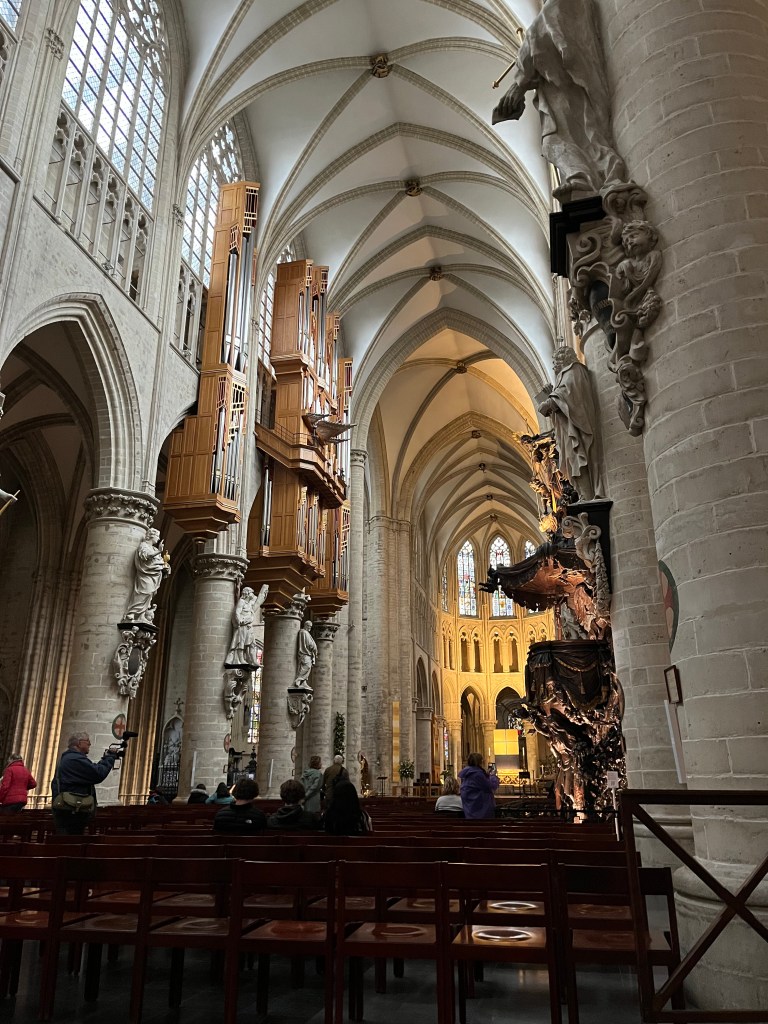
While this may sound like it is two cathedrals, you are actually going to one that is named after two saints, Saint Michael and Saint Gudula as they are the patron saints of Brussels. Belgium is a catholic country with many beautiful old churches. I have spent a lot of time visiting Catholic countries and I never have seen cathedrals as gorgeous as the ones in Belgium. And why might that be? I think because of the time they were built. The construction of this cathedral was started in the 11th century but didn’t finished until the 16th which gives it a mix of romanesque and gothic architecture. Now obviously you can visit the church while attending mass, but if you would rather go a time where you can walk around and take pictures or you aren’t that religious than you can visit for free during visiting hours. Make sure to check before you go because they are a bit shorter on the weekends. If you wanted a guided tour of the church and the tower, then you can book it in advance for free as well. I love visiting old churches so this is definitely a must see in my book when visiting Brussels. It is also a good escape from the cold rain!

Ghent
Now we are moving on from Brussels and focusing on Flanders, which is the northern part of Belgium that speaks Dutch. There are a bunch of old smaller cities that are a must in this region. The first one is Ghent, because that was my favorite of these small cities. Ghent is a city of about 260,000 people and is the 3rd largest city in Belgium. It is a university city and it has that feeling as there are a lot of young people. As Wina, my exchange student friend I was visiting, stated, it feels like walking through Hogwarts. The walk into the city center is nice, but once you are by the river you are surrounded by tall old buildings and canals. The walk through this area is awe-inspiring. Just look at these pictures as I tell you the places you have to go in Ghent. It is like stepping back into time to the middle ages.
Gravensteen
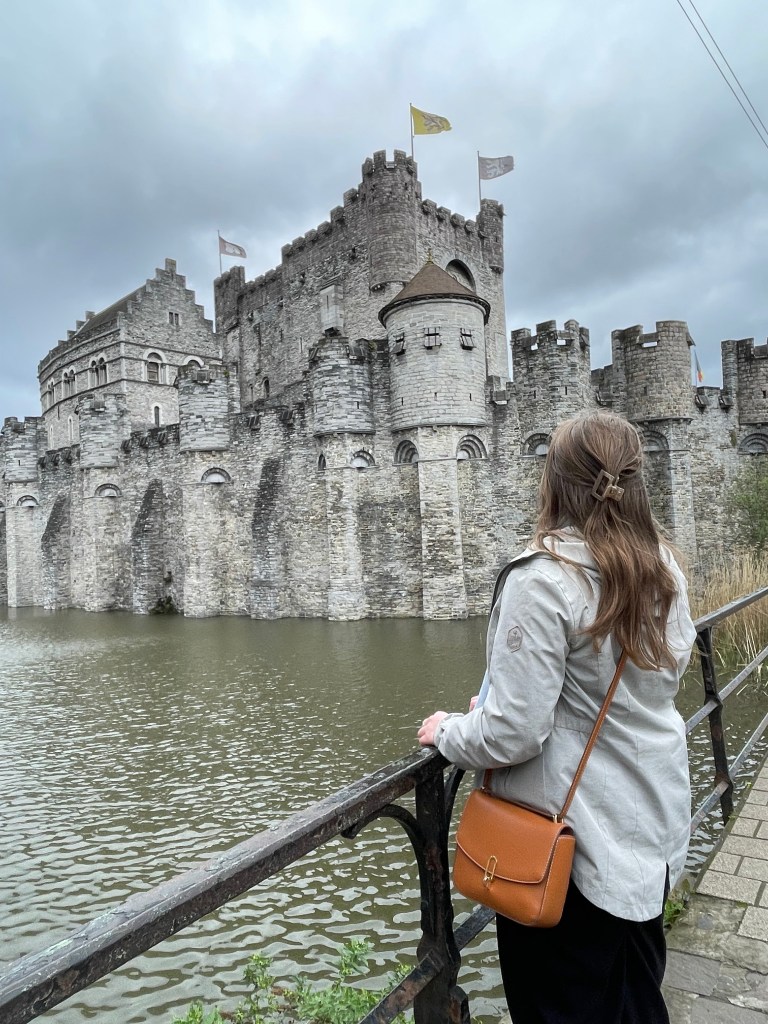
Gravensteen, the castle I like to say in named after me because my last name is Steen. Actually steen is a very common in a lot of dutch words as it means stone. Gravensteen is a medieval castle that dates back to the 12th century and was built as the residence of the Count of Flanders, but that was only for a couple hundred years as it became a court and prison afterwards and a textile factory later. In the early 1900s the city took over ownership and restored the castle to what it is today and opened it up to visitors. It became a big tourist attraction after the World Exhibition in 1913.
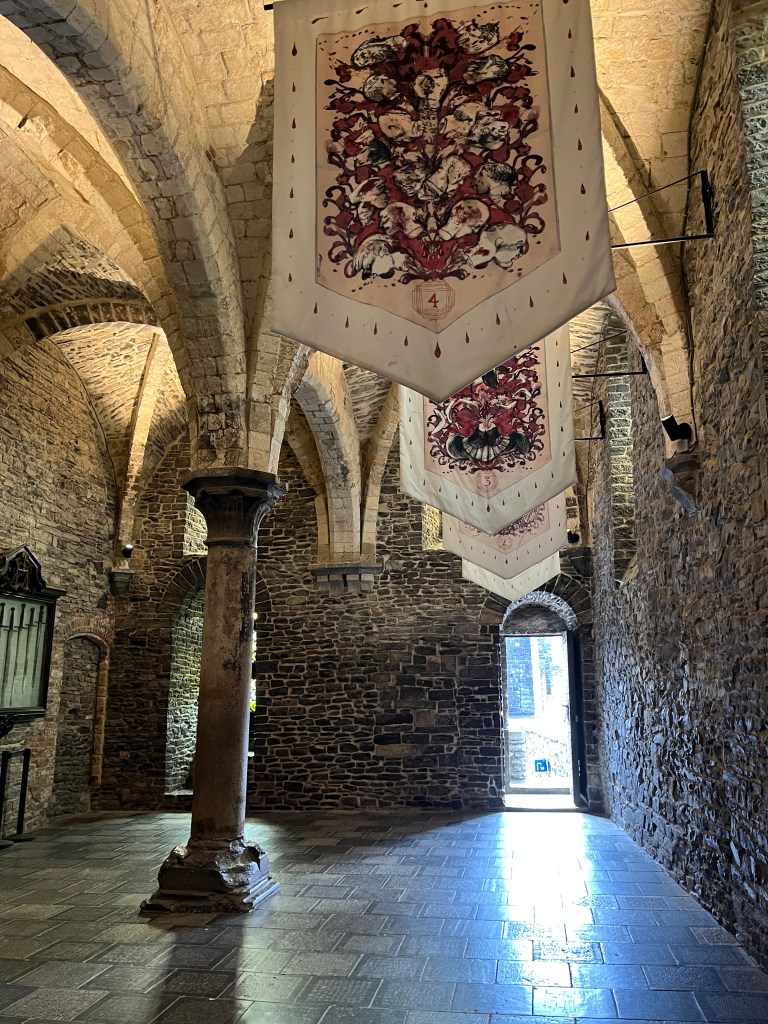
Now you can pay 13 euros (less if you are a student) to go inside the castle. The best part of visiting is the audio guide you get. Available in many different languages, this audio tour is done by a Belgian comedian making learning about the castle that much more fun. Each spot in the castle is unique in its own way and you really get a glimpse into the lives of the people who would have lived here in medieval times. You also end up on the top of the castle with a spectacular view of the city. Make sure to stop at the gift shop as well on your way out. There are not only souvenirs and toys for kids, but many books (sadly mostly in dutch) about the castle and medieval times in Belgium.
St. Michael’s Bridge

By far the best view you will have in Ghent is on St. Michael’s bridge. It is named after Archangel Michael, which you will be able to see a statue of on one of the lampposts. The statue depicts Michael driving his sword through a dragon which signifies him ridding of evil spirits.
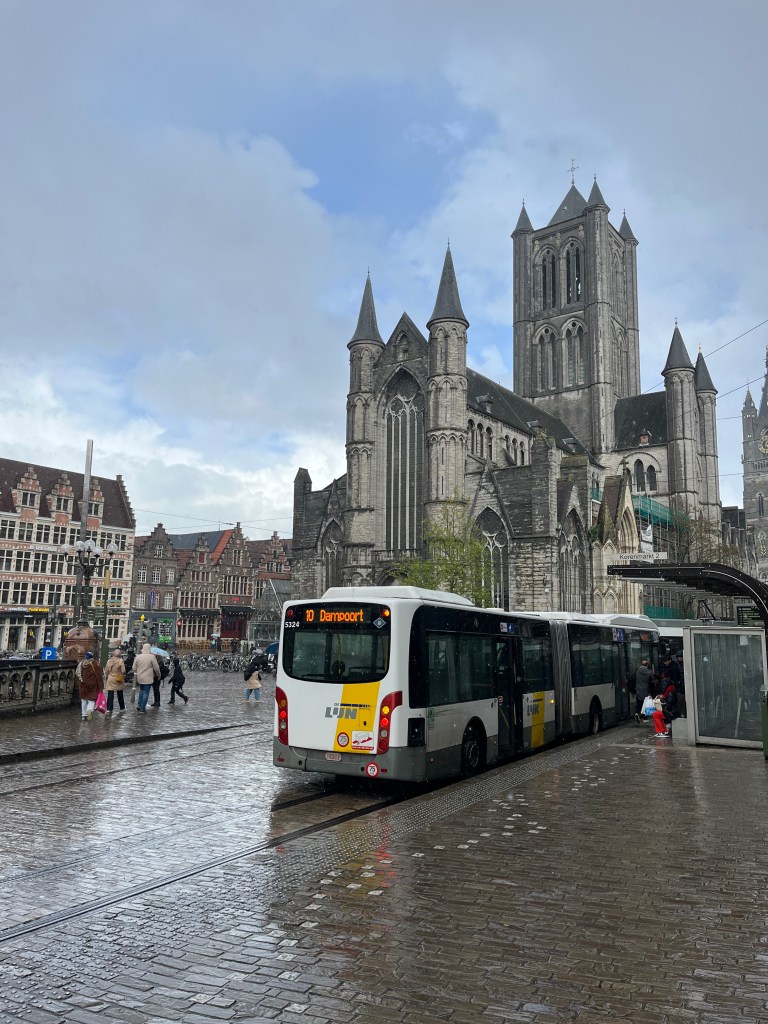
From the bridge you are able to see the “Three Towers of Ghent” which include Church of St. Nicholas, the Belfry of Ghent, and St. Bavo’s Cathedral as shown in the picture. On the bridge you can also see Gravensteen as well as St. Michael’s Church. This bridge makes you feel like you really have transported in time.
Werregarenstraat
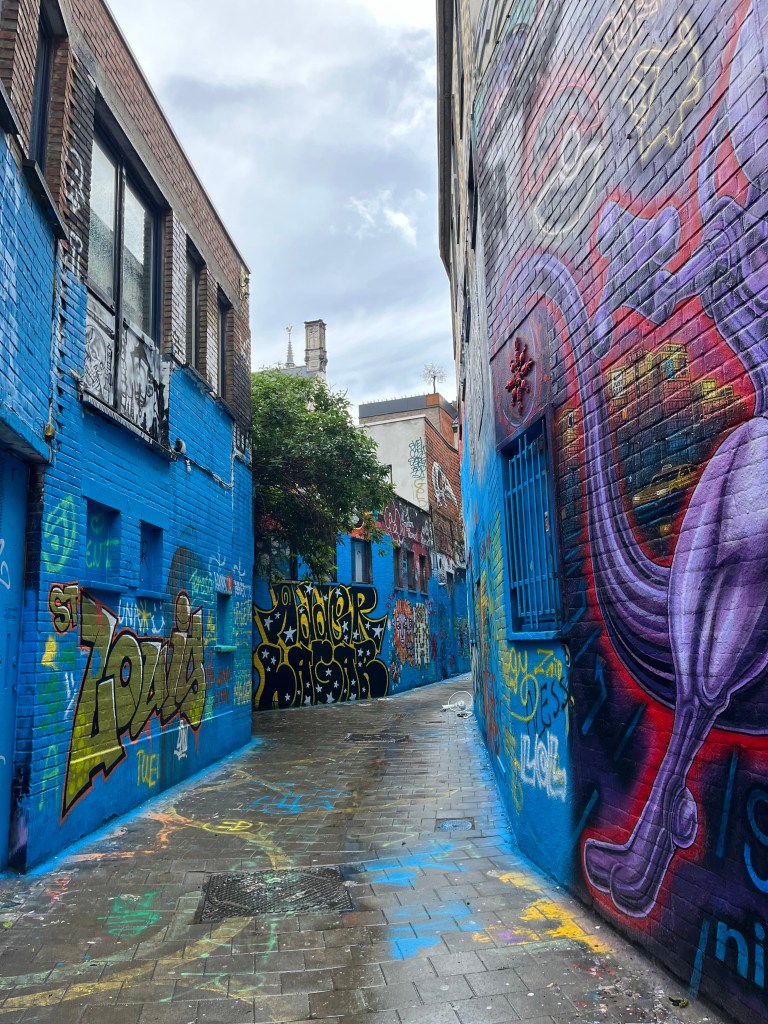
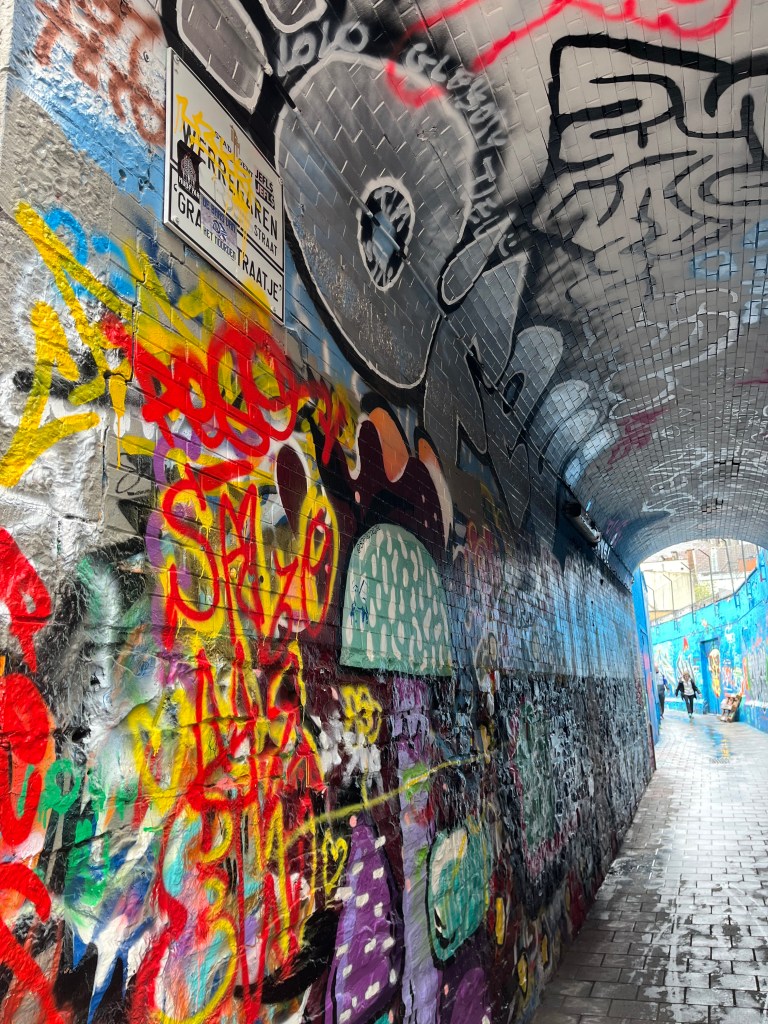
Ghent’s little graffiti street is an interesting change in pace from the rest of the city. It is short and a bit hidden as it is just a walkway, but this street works as the city’s public gallery for street artists. The purpose of the street was to give graffiti artists a place to paint which would ultimately prevent graffiti in other parts of the city. Every so often the walls are painted blank again and new work is done so it is constantly changing. It is definitely worth checking it out and seeing the other side of Ghent.
Cathedrals
As I said in St. Michael bridge there are three big churches and cathedrals to check out in Ghent: Church of St. Nicholas, St. Bavo’s Cathedral, and St. Michael’s Church. I was not able to go inside St. Nicholas as it was closed when I was visiting, but I was able to check out St. Bavo’s Cathedral and St. Michael’s Church. Belgium really has some of the prettiest churches, so I highly recommend if you have to the time to go inside one or all of these churches. They are all in a row as St. Nicholas and St. Bavo’s are on one side of the bridge separated by the Belfry of Ghent and then St. Michael’s Church is right on the other side of the bridge. They are also a nice stop to get out of the cold and rain if you are walking around the city during the off season, like I did.



Canals
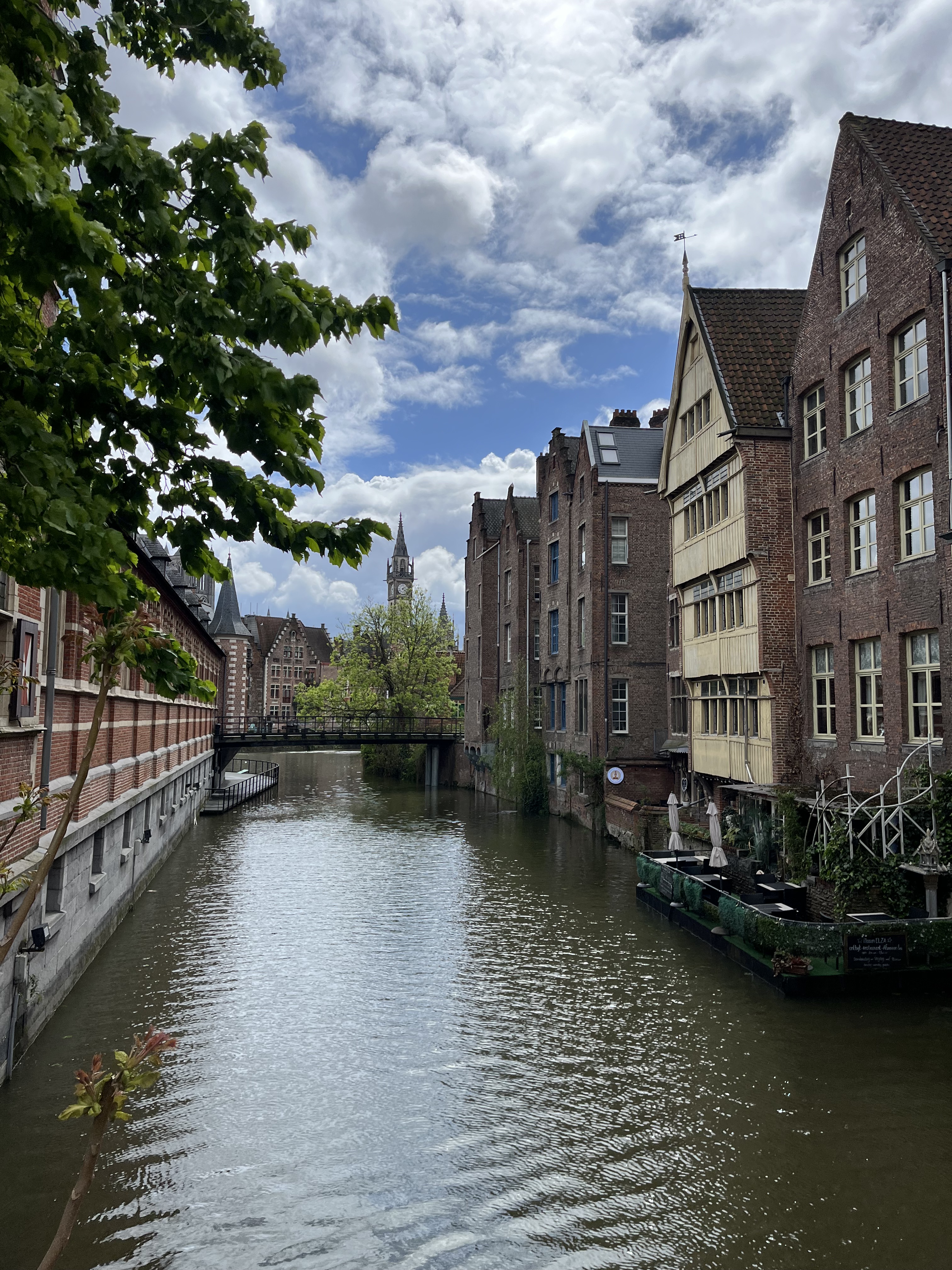
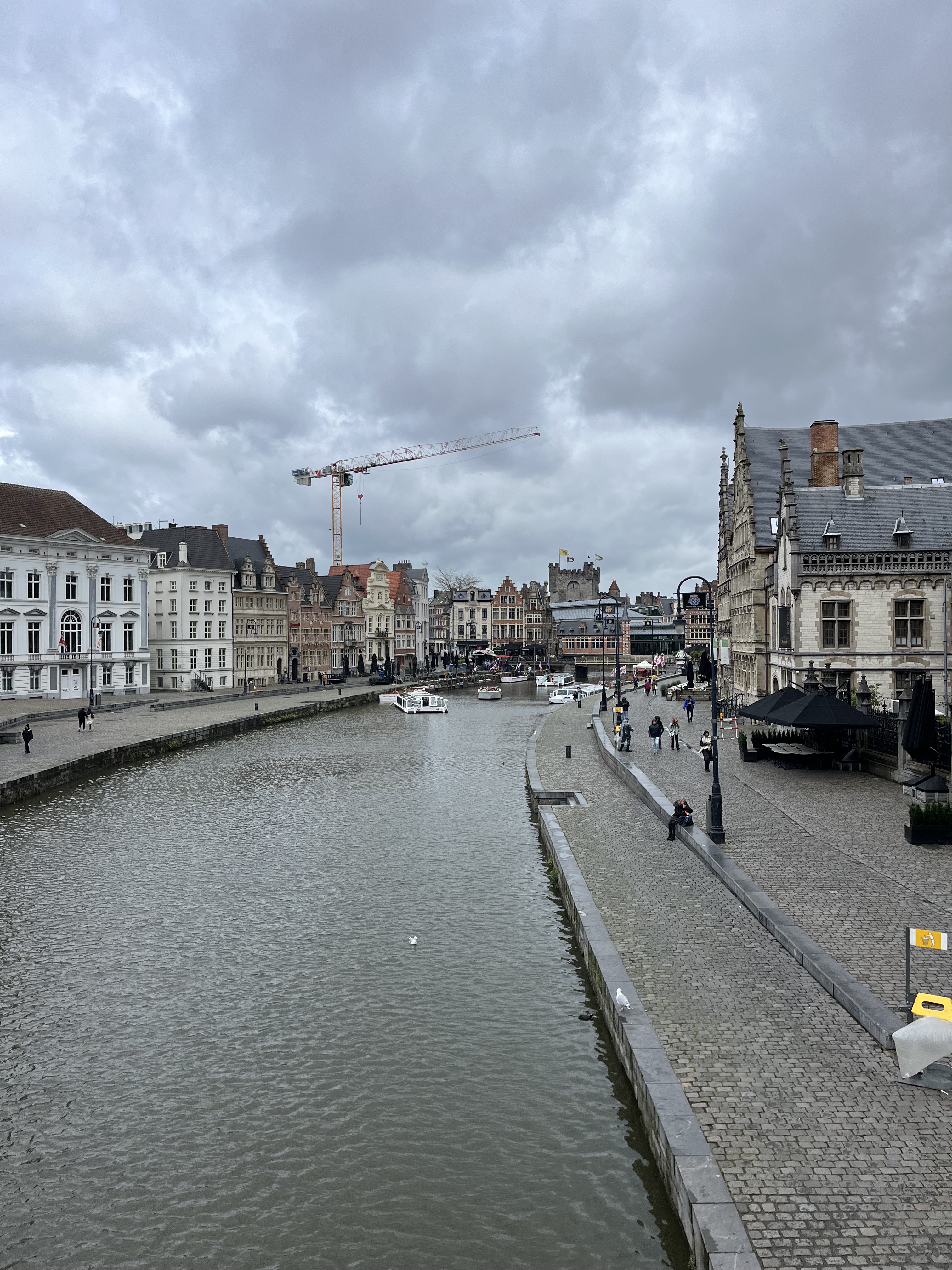
Ghent has two main rivers and three main canals: the Ghent-Terneuzen Canal, the Lieve canal, the Leie river and canal, and the Scheldt River. The Lieve canal and the Leie are the prettiest as the Lieve flows by Gravensteen and takes you through cobblestone streets and middle ages Ghent. The Leie is the river that flows under St. Michaels Bridge and also runs by the Korenlei which is a row of beautiful old houses. These canals will give you the more picturesque side of Ghent, so definitely have the cameras ready.


Bruges and WWI
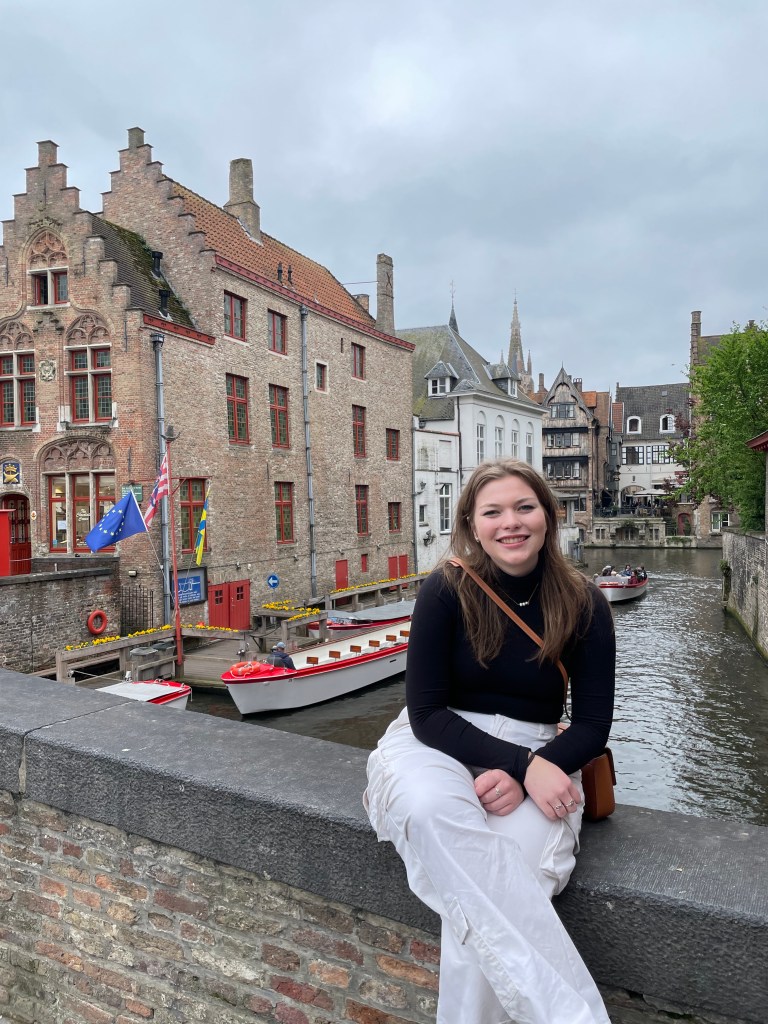
Bruges was my next favorite city after Ghent. It was a day trip for me which means all of these spots I am going to talk about, I did them all in a day. On the way to Bruges from Brakel we did some World War I stops which included a cemetery and some trenches. It also included the pharmacy because as you may be able to see in the pictures, I was really sick (dang airplane cold.)
Bruges is known for its canals, cobblestone streets, and medieval buildings. My first encounter with the city of Bruges was through the Irish movie “In Bruges,” which I highly recommend if you are a fan of “The Banshees of Inisherin.” Bruges is one of Europe’s best preserved cities and its city center is even an UNESCO World Heritage Sight. It is the perfect city for the history lover that wants to be transported back in time. Just don’t go during a football game (or do if that is your thing!)
Tyne Cot Cemetery
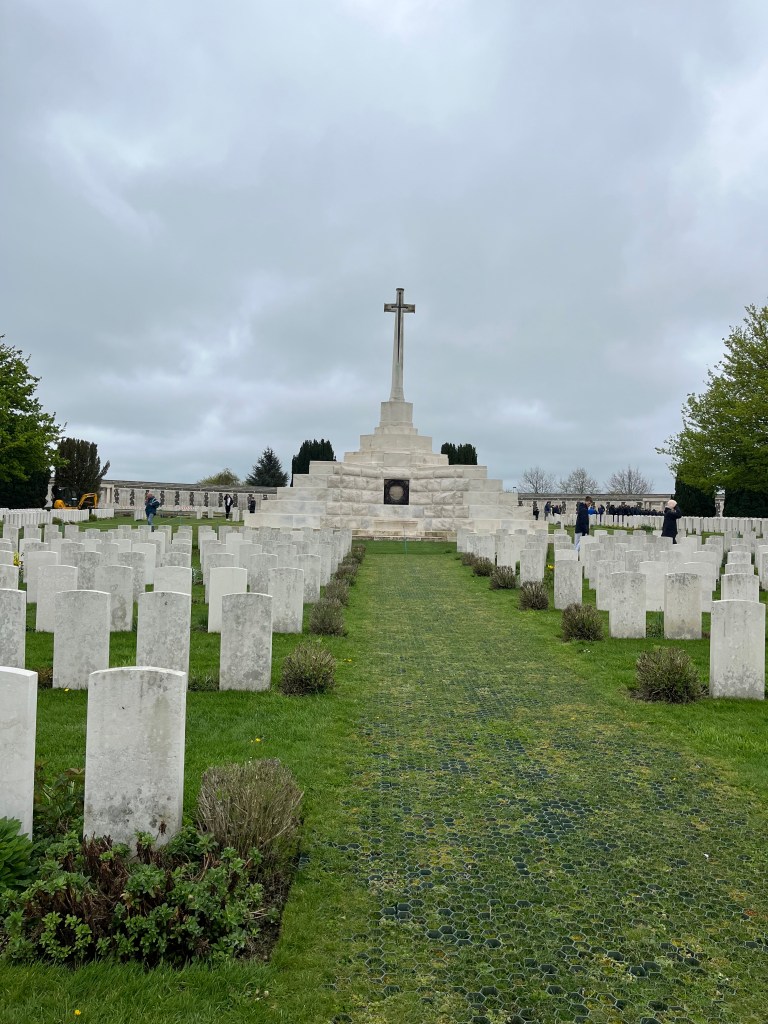
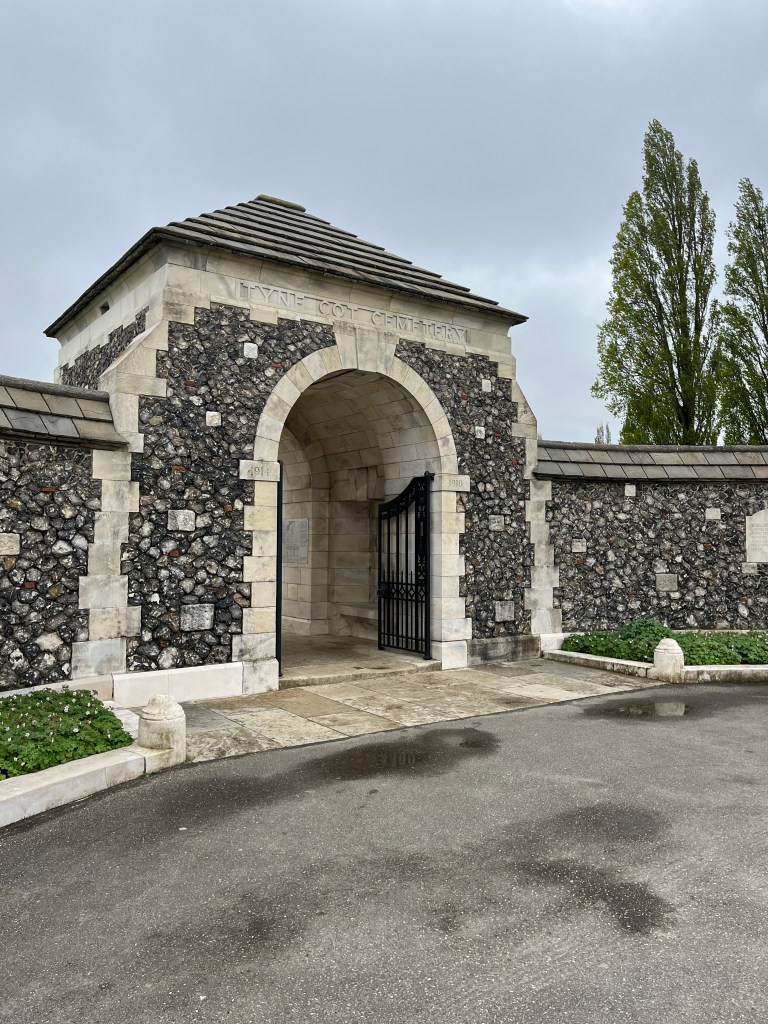
Looking at the name of this cemetery you might be thinking, that doesn’t sound Dutch. Well that is because it isn’t. This World War I cemetery was not for the Belgian forces. It is the burial site of many of the soldiers of the United Kingdom and the commonwealth who lost their lives in Ypres Salient. As an American this may not be your first choice in WWI cemeteries and historical sites, since there is the Flanders Field American Cemetery, but it is not quite as big as Tyne Cot. Tyne Cot also has a visitor center that includes a bit of history on the war and the creation of the cemetery. Once you walk through the cemetery you will see the gravestones of British, Australian, Kiwi, Canadian, South African, and Irish soldiers. The stone wall surrounding the cemetery is a memorial to the missing and lists the names of the soldiers that did not return home.
Dodengang (The Trench of Death)
There are a few different trenches in Belgium you can visit as well but the Trench of Death in Diksmuide is one of the best preserved and longest trenches. Its a small fee of 6 euros to visit and a couple euros less with a student discount. There is of course a bit of history on the site and the war in the visitors center and then on the top floor you can go out onto a terrace for a birds eye view of the trenches


The trench lies along the Yser canal and was used by the Belgians in the Battle of Yser in 1914 to stop German advancement. You can walk through this trenches, but I highly recommend if you are coming during the rainy months, especially in the spring, to wear shoes and pants that can get wet and dirty. Do not make the mistake I did by wearing white pants because you want to look cute in Bruges. The trenches do get very muddy, but it is completely worth getting a little dirty to explore all the different parts of the trenches. As a history nerd this was one of my favorite stops in Belgium.
Belfort and Markt
The Bell Tower and Market Square of Bruges dates back to the 13th century. The square is surrounded by beautiful colorful old buildings along with the Provincial Court and the Belfort. This is the the place to go if you want to start your journey around Bruges in a horse drawn carriage. The Belfort is as a World Heritage Site and offers a great view of the city, once you climb the 366 steps. It is a pricey 15 euros to go inside, so I did not visit the inside. It is a popular spot among visitors and it must be for a reason, so don’t let that sway you against it.
Rosary Quay and Canals
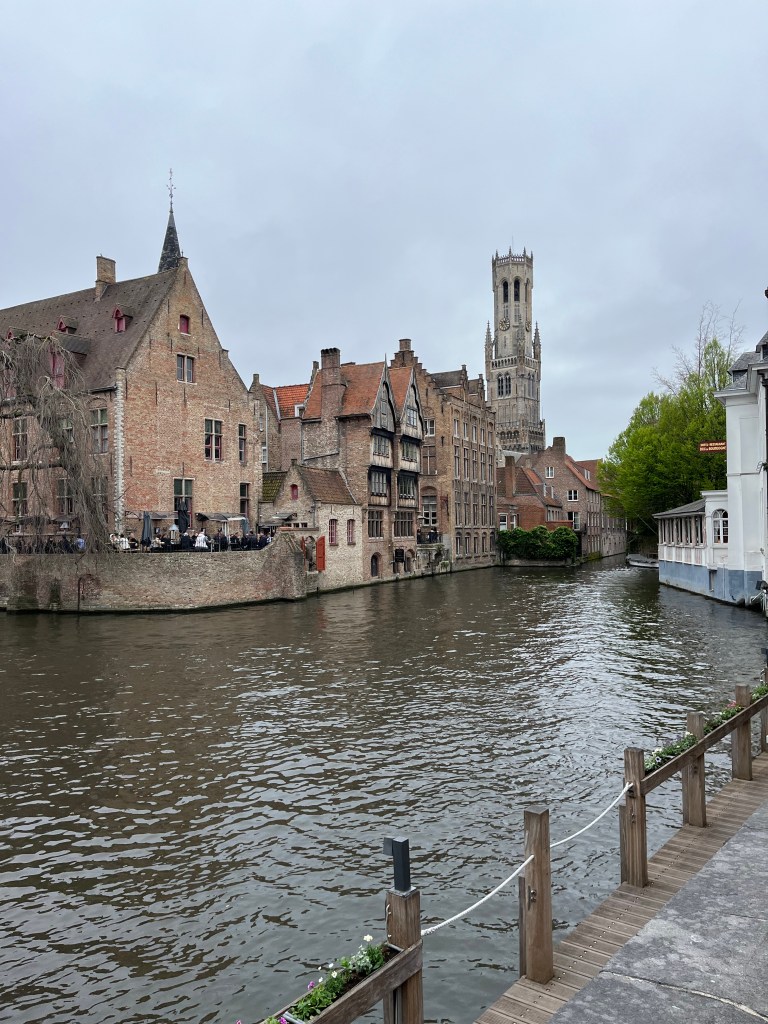
I can bet that when you first think of Bruges, you think of the canals. Rosary Quay is the spot on these canals that is the most photographed. It is named Rosary Quay because this was a spot in town where rosaries were once sold. It is also the spot where the Dijver and Groenerei canals come together today and it is also a hotspot for restaurants and bars as people love to be seated next to the canals. You can even do a canal tour to experience the full beauty of Bruges.

Bruges City Hall
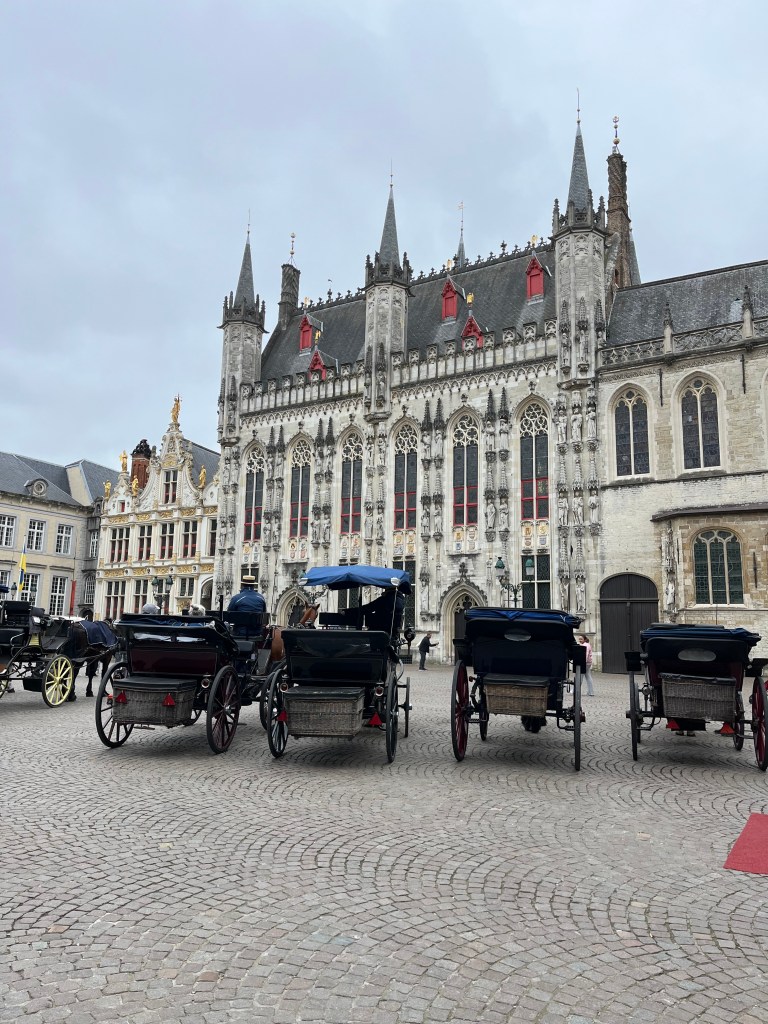
This gothic building has been the ruling place of Bruges for nearly 600s years. It sits in Burg Square which is where you will also see many horse drawn carriages lined up and maybe even some buskers. Its a smaller square than market square but its quaint and hidden qualities given it a unique charm. You can go inside of the town hall for 8 euros and experience its history, art, and archeological exhibits. This is a great stop in Bruges even if it is just to see the outside and take a picture.
Sint-Salvatorskathedraal
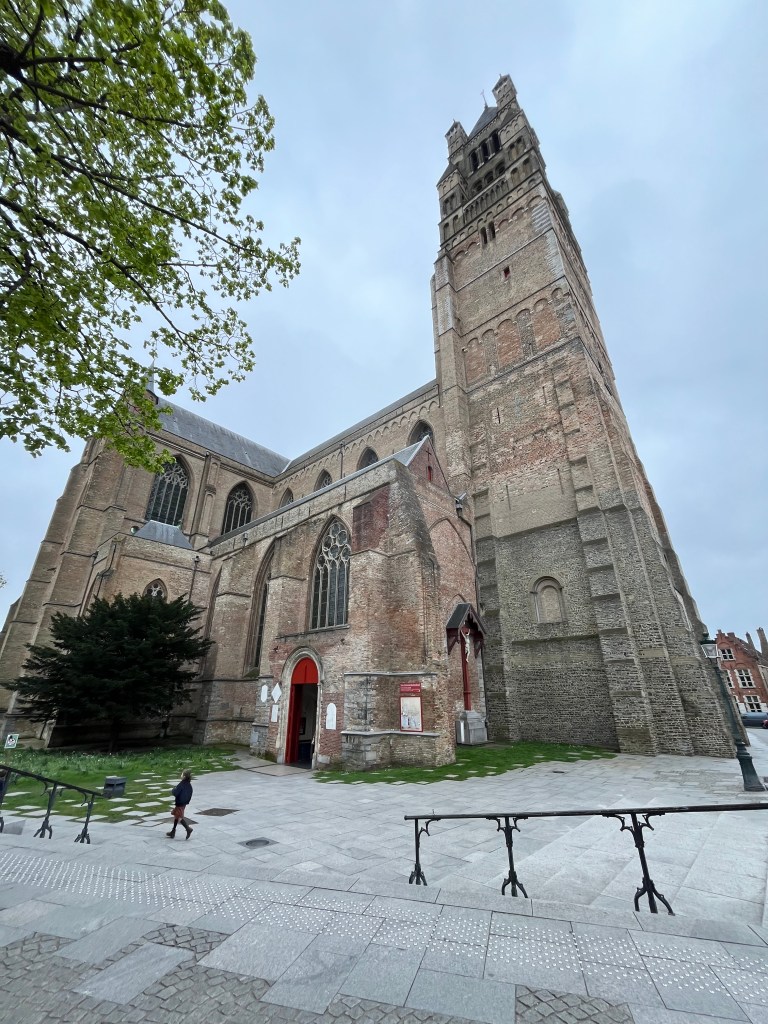
St. Salvator’s Cathedral is another of Belgiums beautiful cathedrals. It is the oldest of Bruges’ parishes as it was never intended to be a cathedral and it holds old Flemish tapestries and paintings. The gothic cathedral has since been restored and now houses two organs. It feels like it is in an odd part of the city as it is located off of the shop street rather than the old town squares, but it still isn’t far from all the rest of the old sites in Bruges, as it is a very walkable city. Just make sure to check the times that the cathedral is open because it can differ between the days and if you can’t visit during visiting hours and you are feeling adventurous then attend mass here with the locals.

Beer
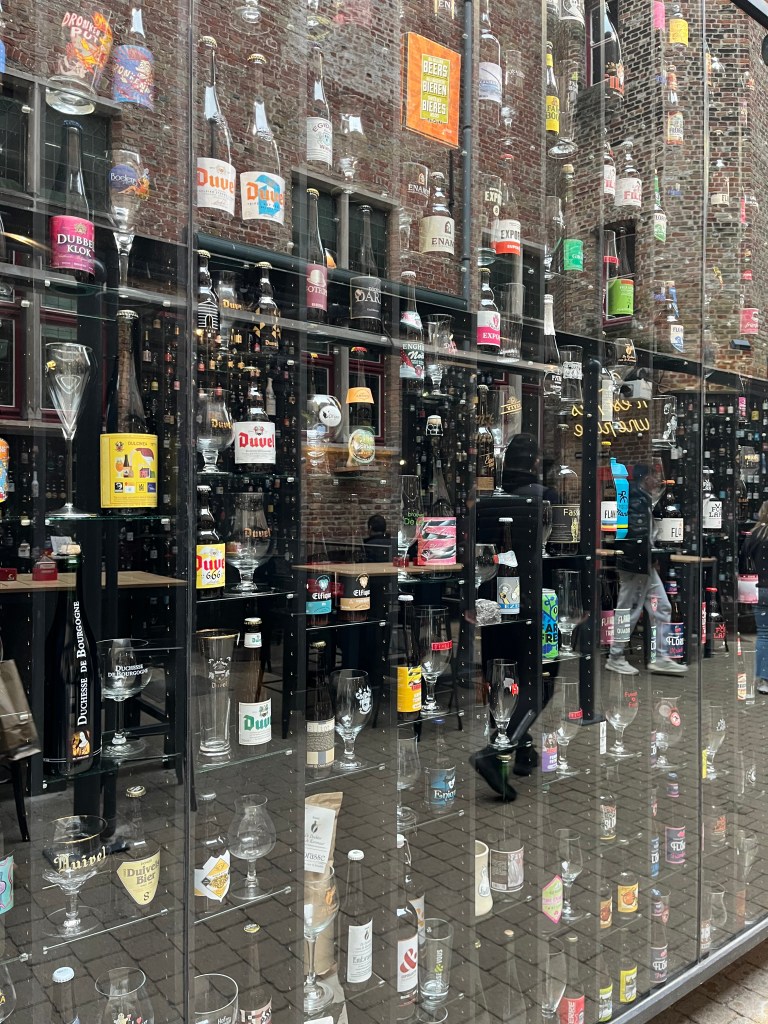
Any trip to Belgium would not be complete without trying some beer, whether that is in Ghent, Brussels, or Bruges. Bruges is well known for its breweries. It is not hard to find a place to stop for a drink. You can even visit the beer experience for a history of beer in Belgium or do a walking tour of some of the best breweries and bars in Bruges. Don’t forget to visit the beer wall as well outside the entrance to 2be beer bar and shop. This wall will show you all the Belgian beers that you can indulge in on your trip. And if you aren’t a beer fan I recommend a fruity beer. Unlike the sours we have here in the US, a fruity beer in Belgium has more of a resemblance to ciders.
Football
Now we all know how big soccer is in Europe. If you have never been to a soccer game in Europe, then you have to, because the soccer culture is crazy. Imagine American football fans, but slightly intoxicated and loud. That is the Belgian soccer culture. But don’t take that to mean they are annoying. Rather I feel European football fans have more of a community. They mess around with each other and are constantly going back for more beers for each other. They are really having a good time. The game is never boring as the fans on both sides are constantly coming up with a new cheer, which you will have to learn. And there is really nothing like experiencing your team getting a goal. So grab yourself a beer and a brat and sit back, or not actually, and enjoy the football culture.

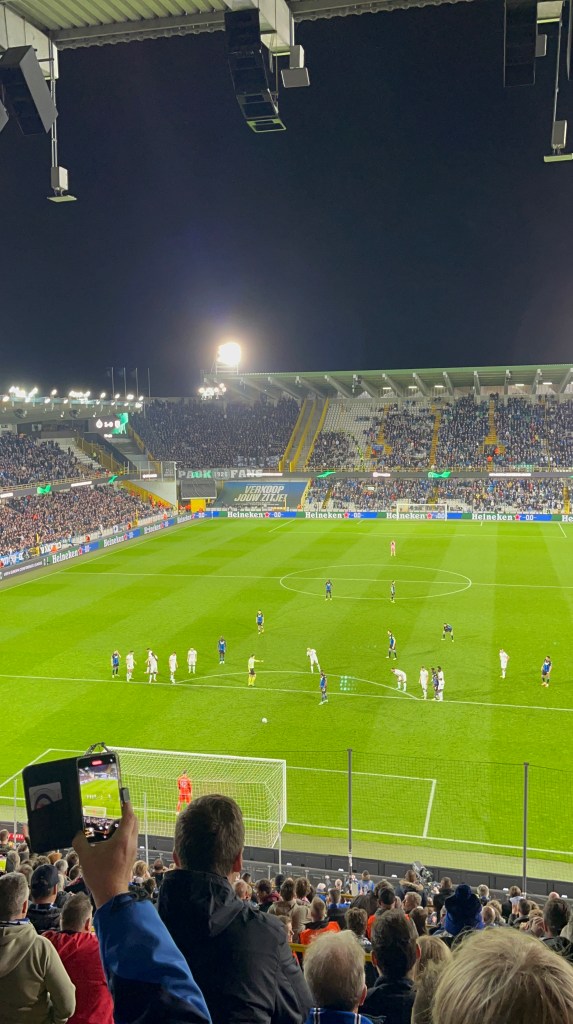
This is an experience you can get throughout Europe, but I had to put it under Bruges, because Wina was a fan of Club Brugge and she took me to one of the games, so I am automatically a Bruges fan. I also have the Club Brugge scarf. If you aren’t familiar, it is very common to show off you team pride with a scarf. I don’t wear mine. It is solely for decoration.
The North Sea
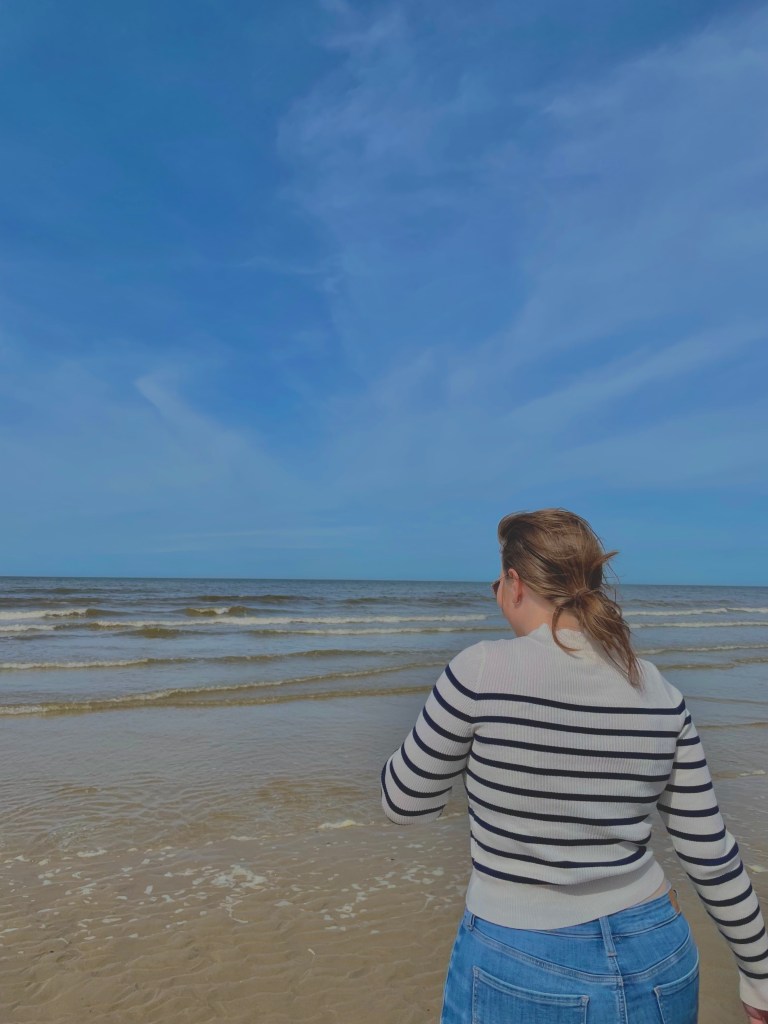
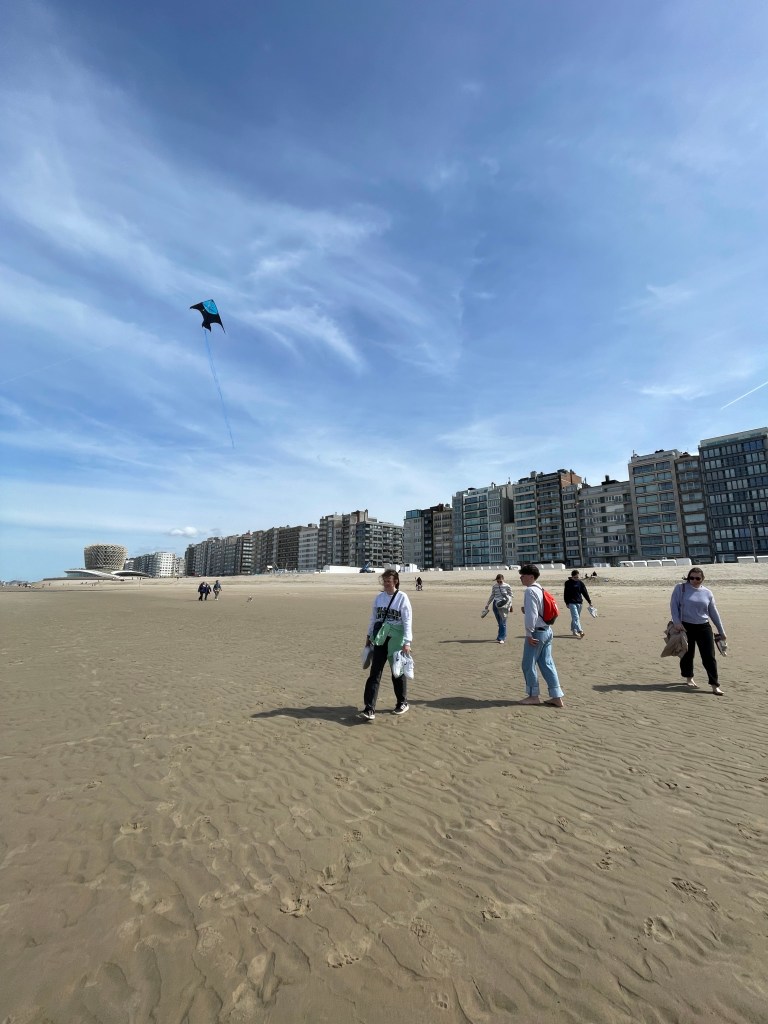
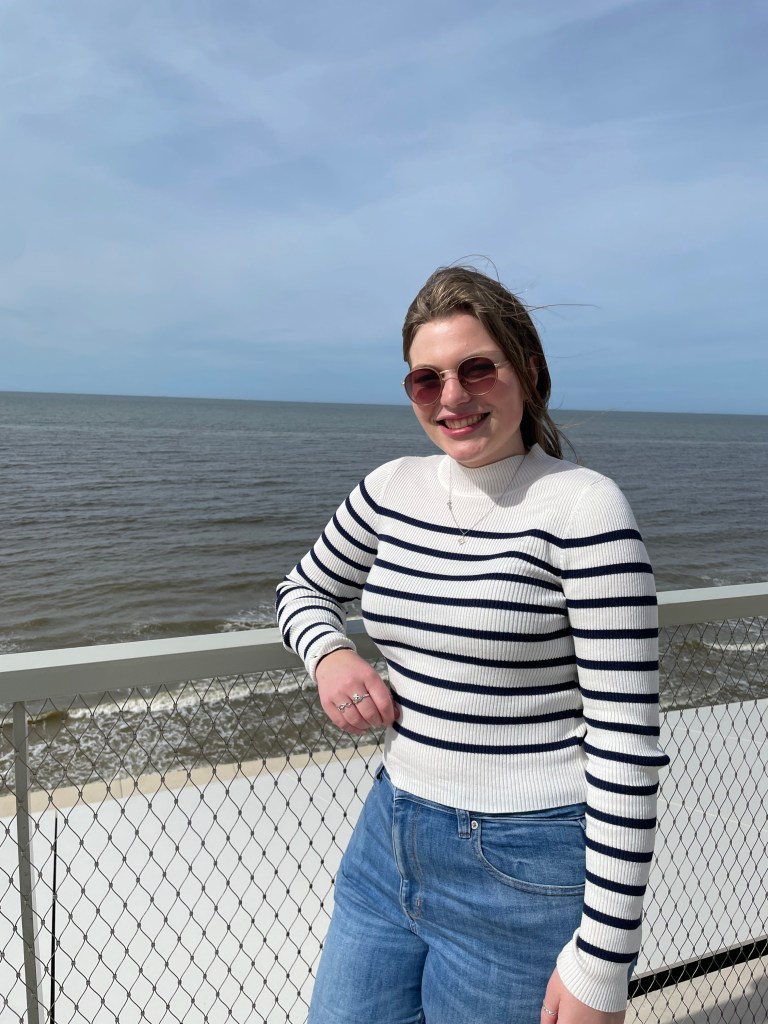
Going to the beach is not typically the first thing you think about when visiting Belgium. I didn’t even think about going to the sea when planning my trip to Belgium, but yet I found myself with a family of Belgians in Oostende experiencing a typical beach day, except it was April, so it wasn’t warm swimming weather. It was sunny though and the walk along the beach was really nice. The water wasn’t that cold, so don’t be afraid to dip your toes in the sea. Its safe to say that this unexpected stop was one of my favorites. Maybe it was the go karts or spending a day with 6 Dutch speaking Belgians, but going to the North Sea was a lot of fun.
Billekarren (Go Carts)
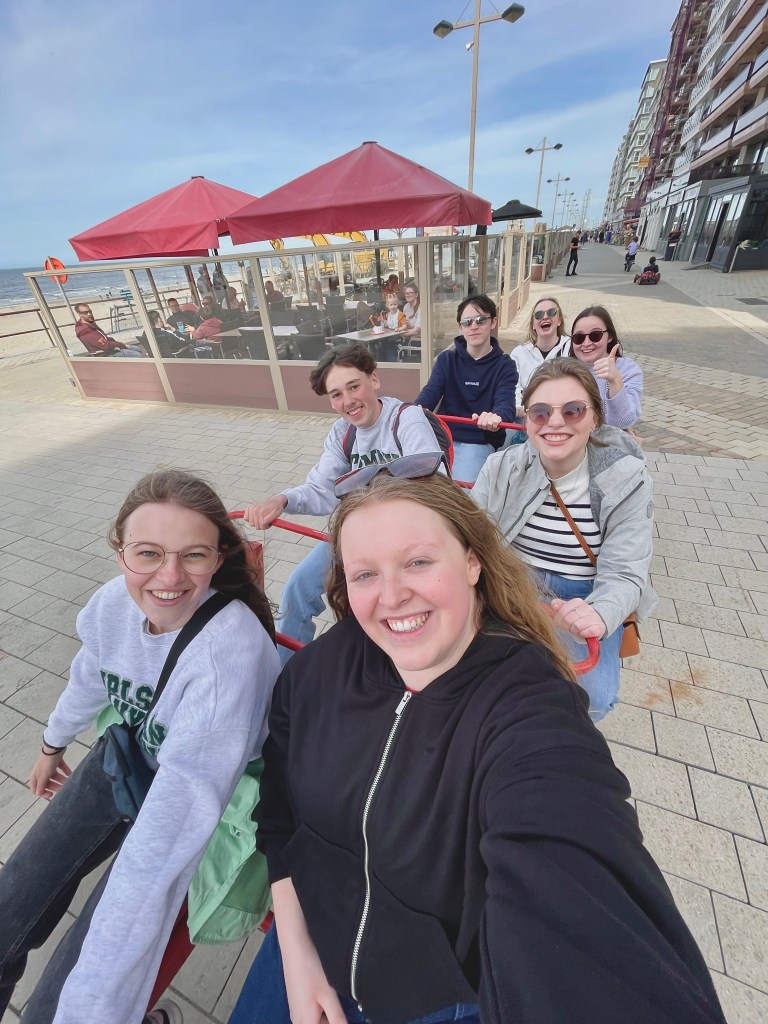
Go carts in Belgium are different than our version of go carts in the United States. It is not a little car that you are driving around a track. It is a big bike that everybody pedals. It is a must when at the beach in Belgium. They aren’t terribly expensive and you get them for a decent enough amount of time to drive down the walk and see the beach. We were able to get a cart that fits 7 people, so there are lots of options. And if one place doesn’t have what you need then keep walking, because there are plenty of places to rent these carts so you are bound to find one with what you need! The ride is so much fun and the walk doesn’t get too busy so you can go as fast as you want. You may even find yourself coming across a little concert like we did!
Food and Drinks
When you can’t lie on the beach there is still plenty to do. There are quite a few places to grab lunch or dinner along the beach walk. Seafood is obviously the way to go, but I am just going to say I did not like the shrimp croquettes as much as I thought I would. They are a bit fishy, but a typical Belgian food, so you should try it. If you aren’t feeling that adventurous you can always have fries, because you will never get tired of Belgian fries.
A beach trip wouldn’t be complete without ice cream or gelato as that is much more common in Europe. Whether you are visiting in early spring or late summer, it is never too cold for ice cream, especially at the beach. Just make sure you get a little sweet treat for dessert.
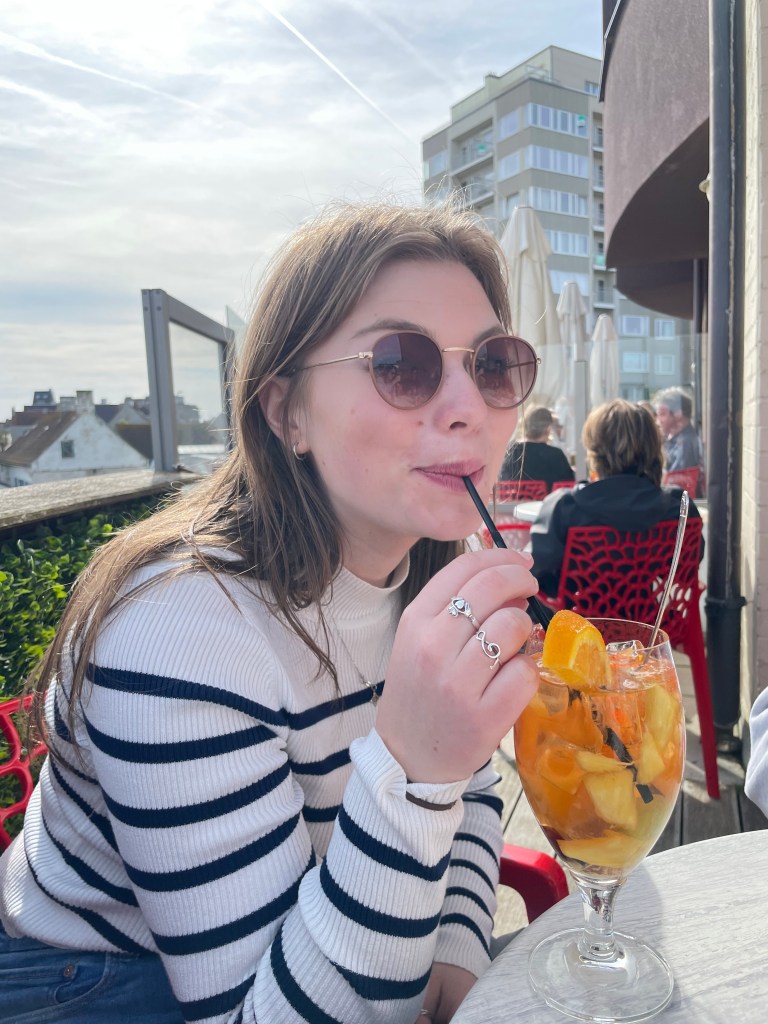
Then there is my favorite part about Europe, which is that you can go to about anywhere and just get a drink. That is a part of European culture that I really wish was common in the United States. We go to restaurants to eat and cafes to get a coffee and work, but we never just go somewhere to get a drink (alcoholic or a soda) and just hang out. This is a great place to appreciate this part of European culture. You can even get a sangria!

Antwerp
It might seem strange that a city you all have probably heard of is at the bottom of this list of places to go in Belgium. In my opinion Antwerp wasn’t all I thought it would be. It wasn’t a bad city, but I felt like I did the least amount of stuff here and nothing really resonated with me like the other cities. That could be because I did Antwerp as a day trip so I didn’t have the amount of time to do some of the things that take a bit more time, so definitely take your time in Antwerp.
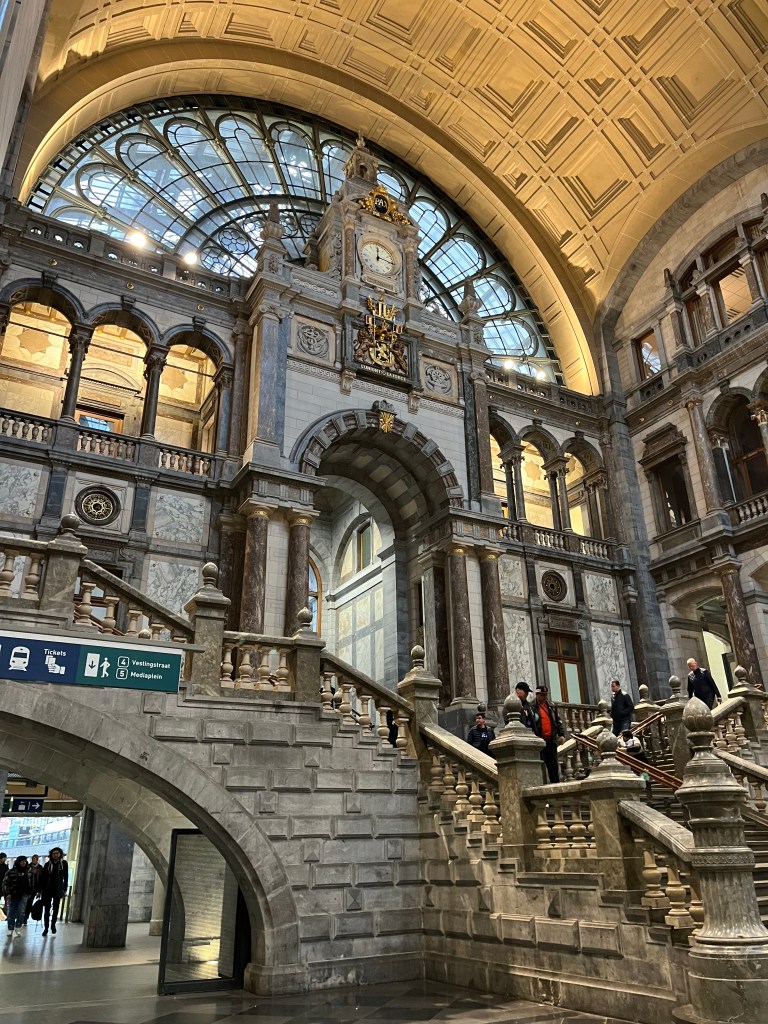
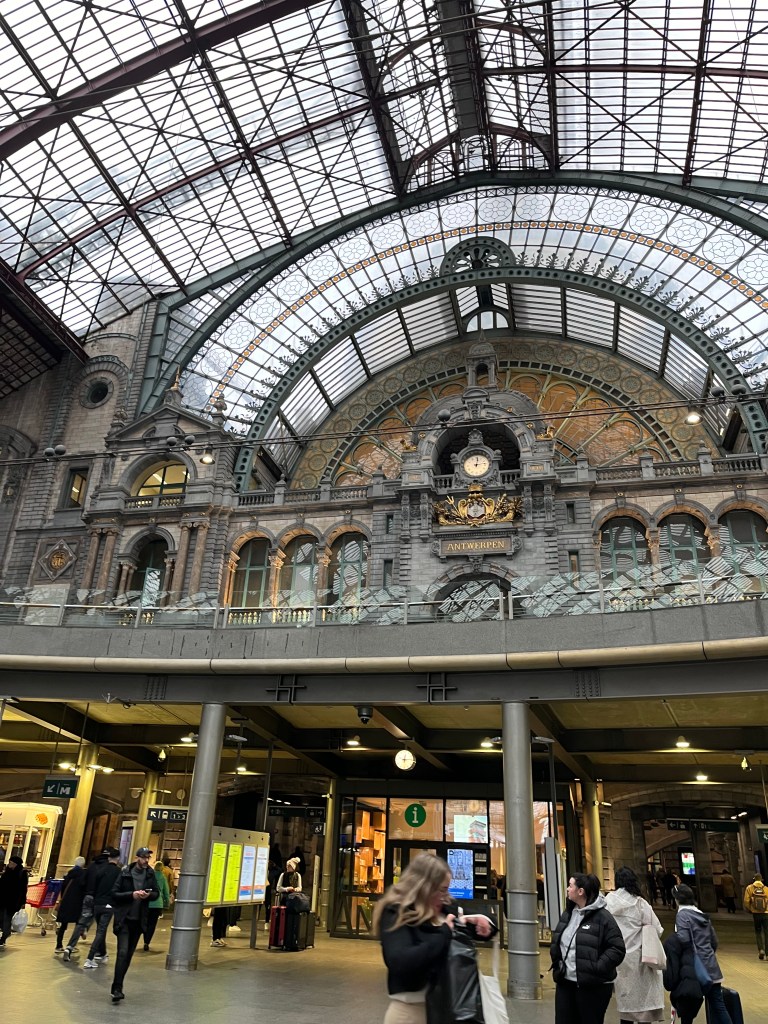
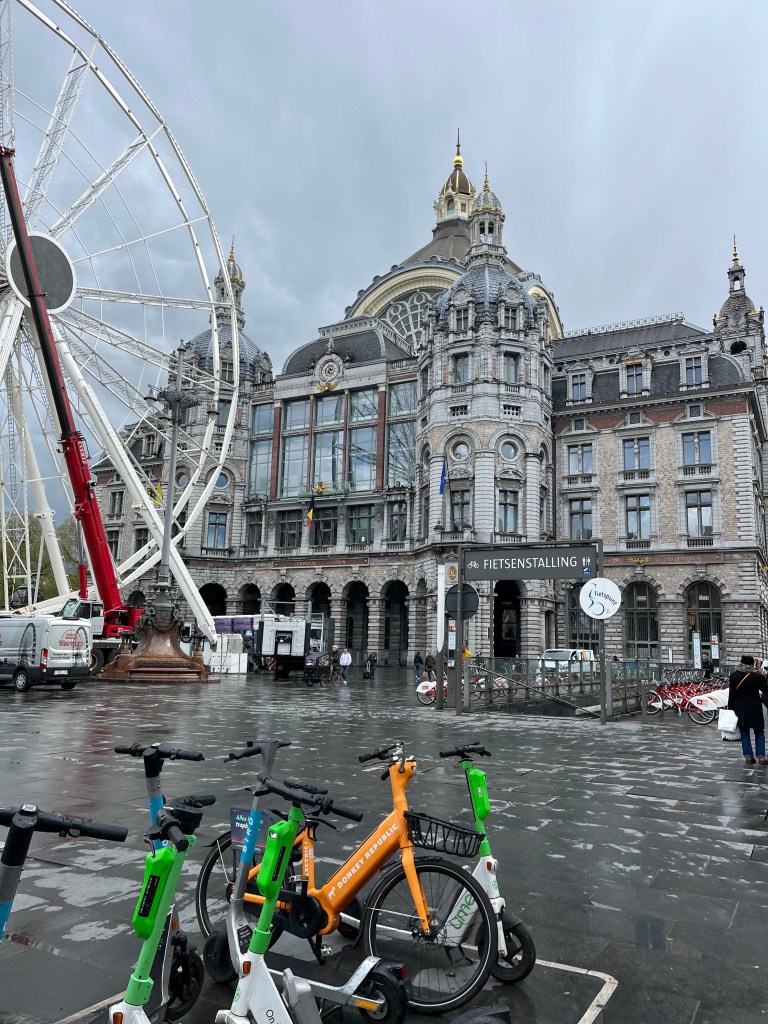
Antwerpen-Centraal Station
Antwerp is somewhere that you have to take the train too, because of its train station. Beyond its status as a hub in Belgian railways, it is one of the most architectural stunning stations inside and out. It was designed by Louis Delacenserie in the late 1800s to replace the old wooden train station from 1836. It finished construction in 1905, but has since gone through some reconstruction to fix the damage of World War II and the deteriorating of the 1900s.
Cathedral of Our Lady
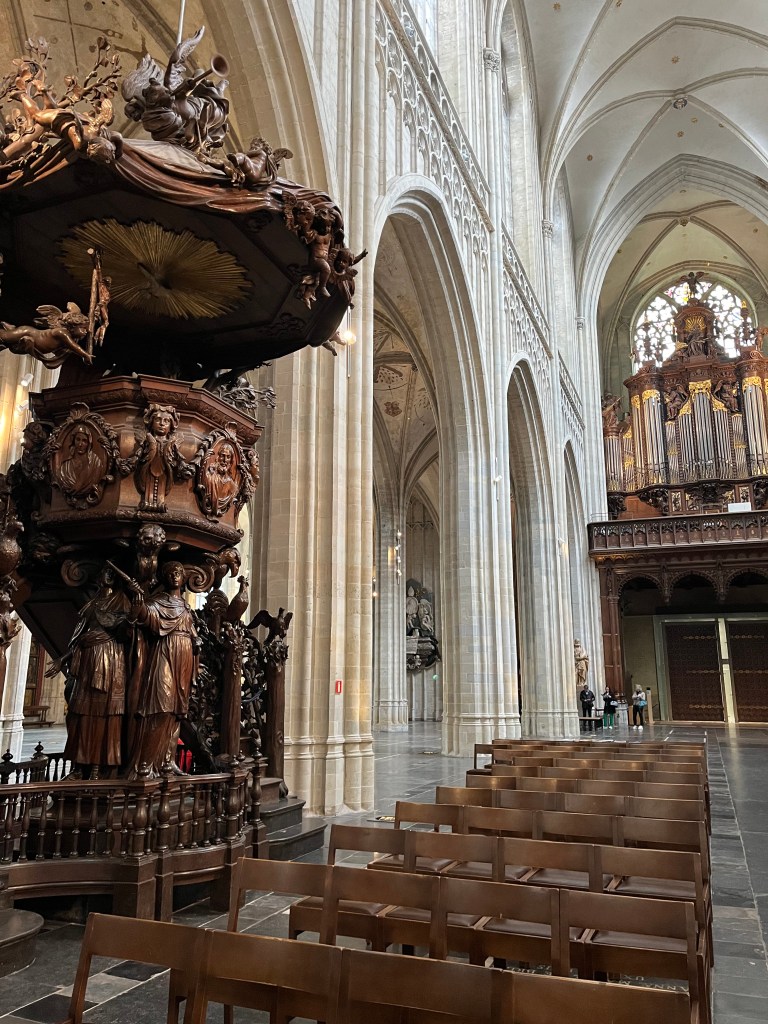
This cathedral is the only I did an official tour of in Belgium, which I am glad I did, because there is so much history you don’t learn by just visiting cathedrals on your own, unless you actually do the research. I didn’t have the time to go to a museum, so I figured it was a good investment to buy the 12 euro ticket to visit the cathedral and join in on a tour. The nice thing about this tour is that the tour is included in the admission ticket so you can hop in and out of it as you need.
Like many of the other cathedrals in Belgium, Our Lady was originally built as a parish church. It was built in the span of 200 years and was complete in 1521. It is about 123 meters tall and no building in Antwerp is allowed to be taller than it. The Cathedral is now a World Heritage Sight. Its gothic architecture is eye catching but what it holds in the inside is just as engaging. It houses paintings by baroque painter Peter Paul Rubens as well as other older and new paintings and art collections.


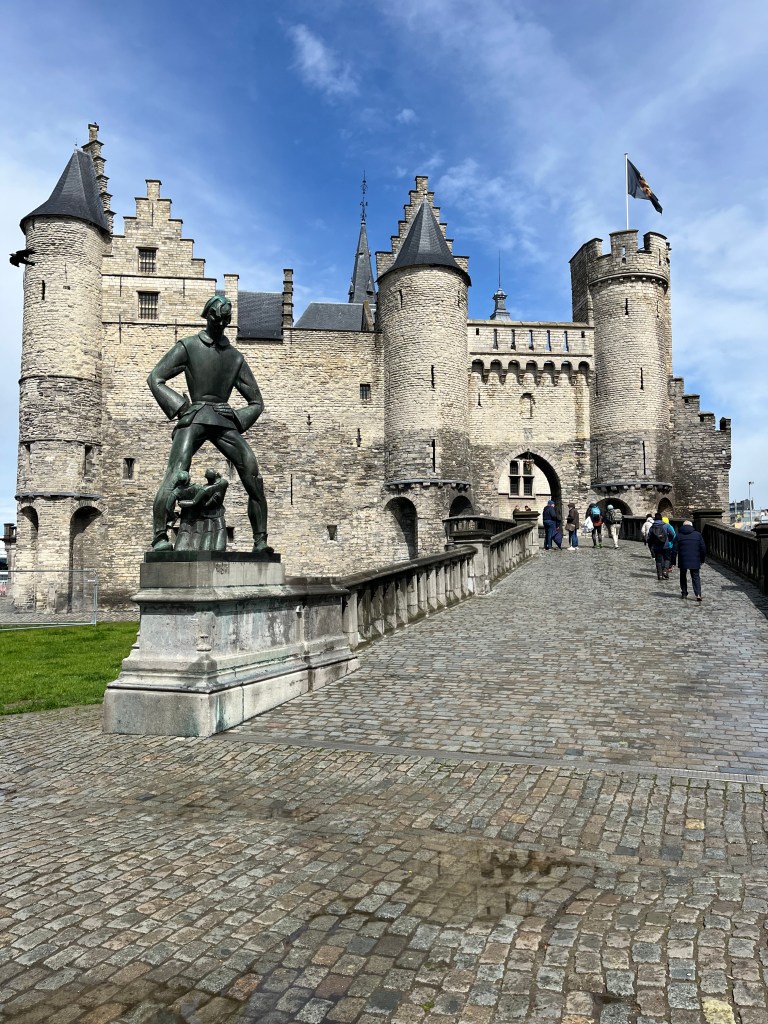
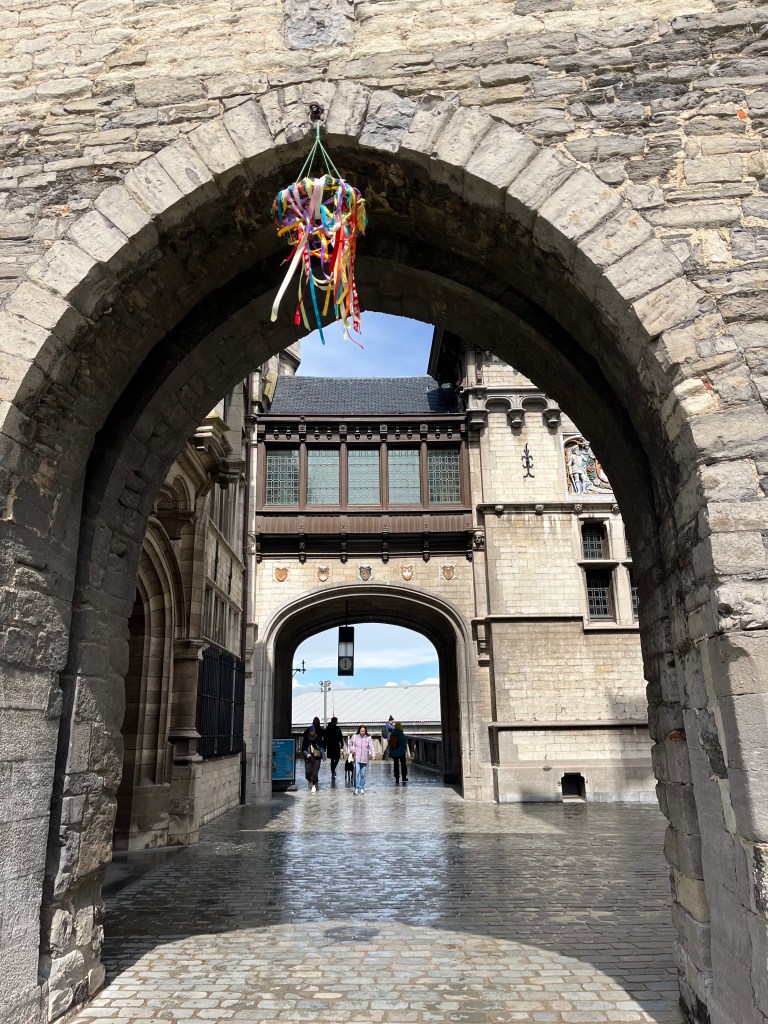
Het Steen
Located on the Scheldt is the medieval fortress of Hetsteen. While not as formidable as Gravensteen in Ghent, Hetsteen is still a great stop for castle lovers. It was built in the early 1200s and its smaller size is due to the fact that is was built as the gateway to a bigger castle that was sadly demolished in the 1800s.
Today it serves as the visitor center for the city. It includes an exhibition on the story of Antwerp for 7 euros, but it sadly wasn’t open when I was visiting, otherwise I would have definitely spent some time here. It also has a panoramic view of the city on the fortress’ terrace, as well as tourist information and gift shop, and De Gulle Waard, a statue within one of the rooms that I did see.
Grote Markt
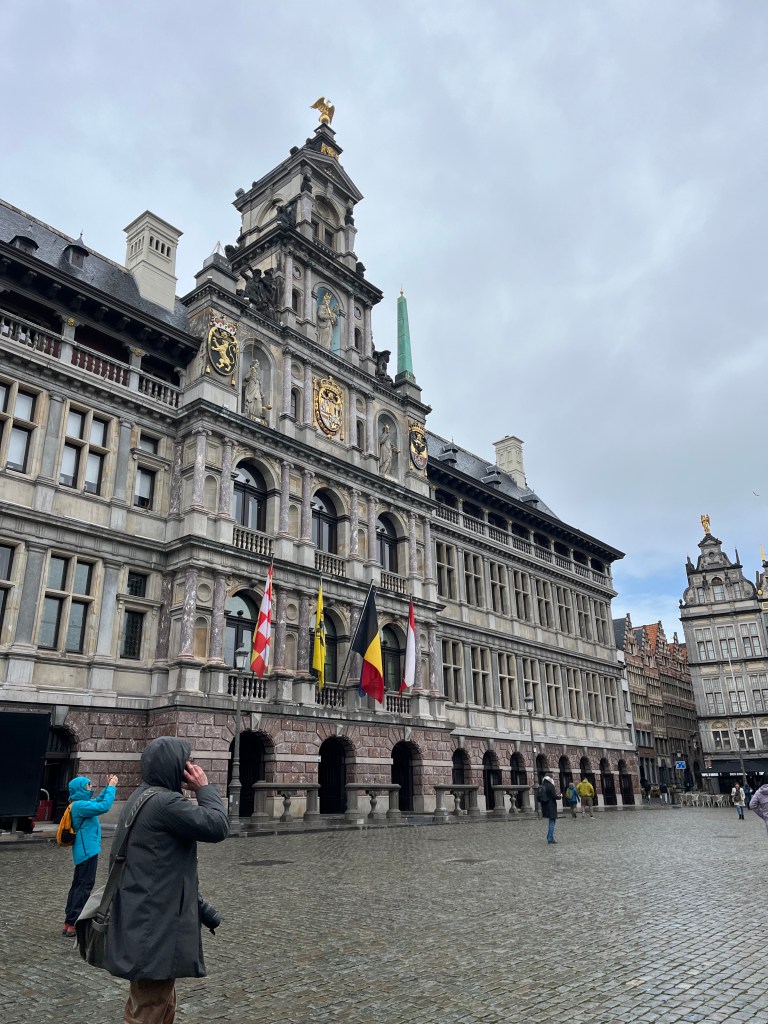
Grote Markt is the main square in Antwerp. It serves as the market sqaure and ice rink in the winter time, but the rest of the year you get to enjoy the 16 century renaissance town hall and the surrounding guildhalls that were built in the 19th century. The statue in the middle of the square is called Brado Fountain, which depicts the legend of Roman Soldier Silvius Brado who founded the city after cutting off the hand of the giant Druon Antigoon. There are also a few cafes and restaurants you can stop at in the square and there is even a public restroom which is always a plus (you still have to pay some cents to use it though).


Vlaeykensgang
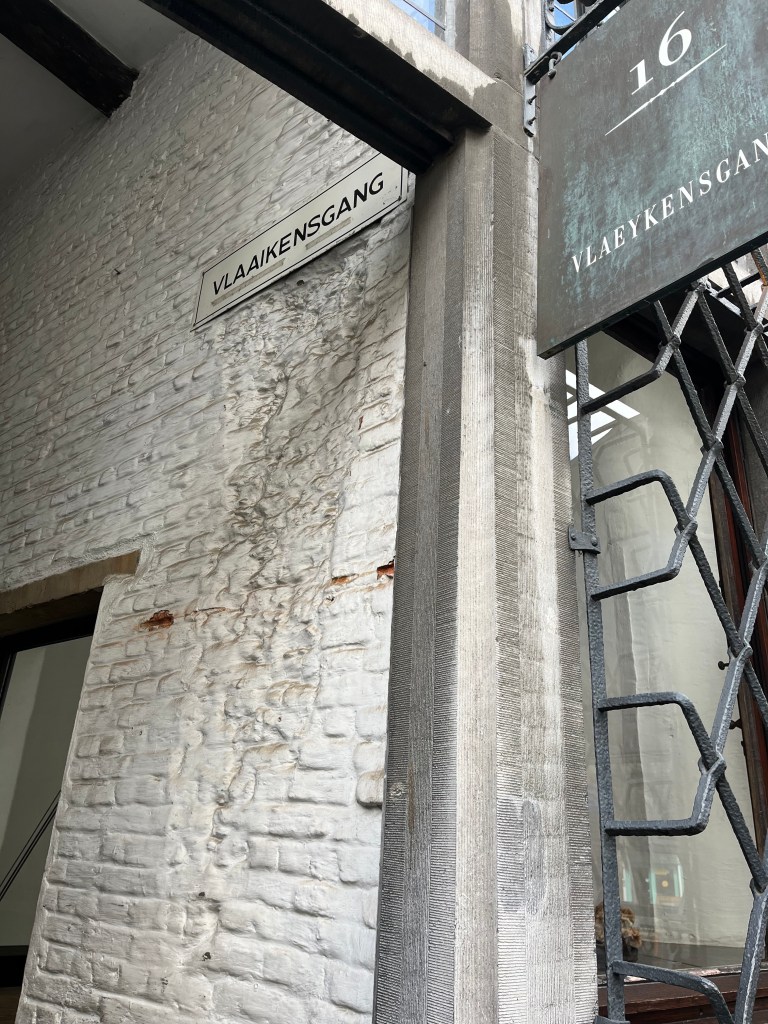
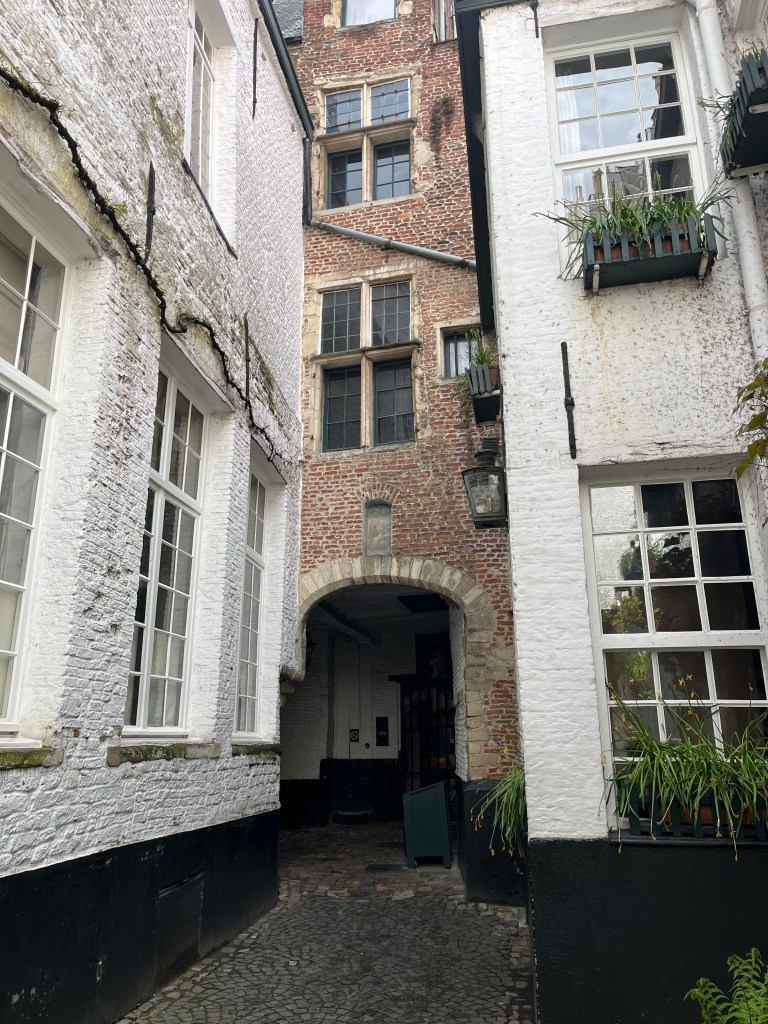
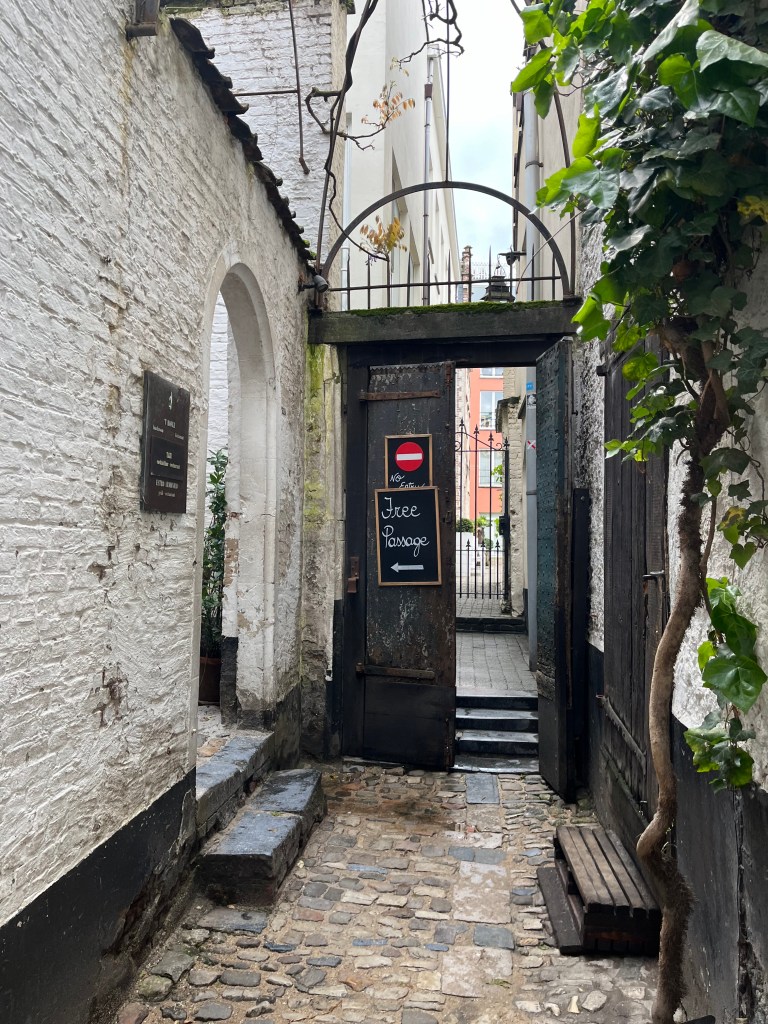
This medieval street from 1591 is a hidden gem in Antwerp. There used to be many streets like this in Antwerp but many were destroyed. Luckily this one survived and was restored to allow visitors and locals a chance to experience old Belgium. Along it you will find the entrances to a couple restaurants and art galleries. It is also a cozy spot to walk or take a break on a bench as it is very quiet and there is a good chance you’ll have it to yourself. This was one of my favorite spots in Antwerp.
Nello & Patrasche Statue
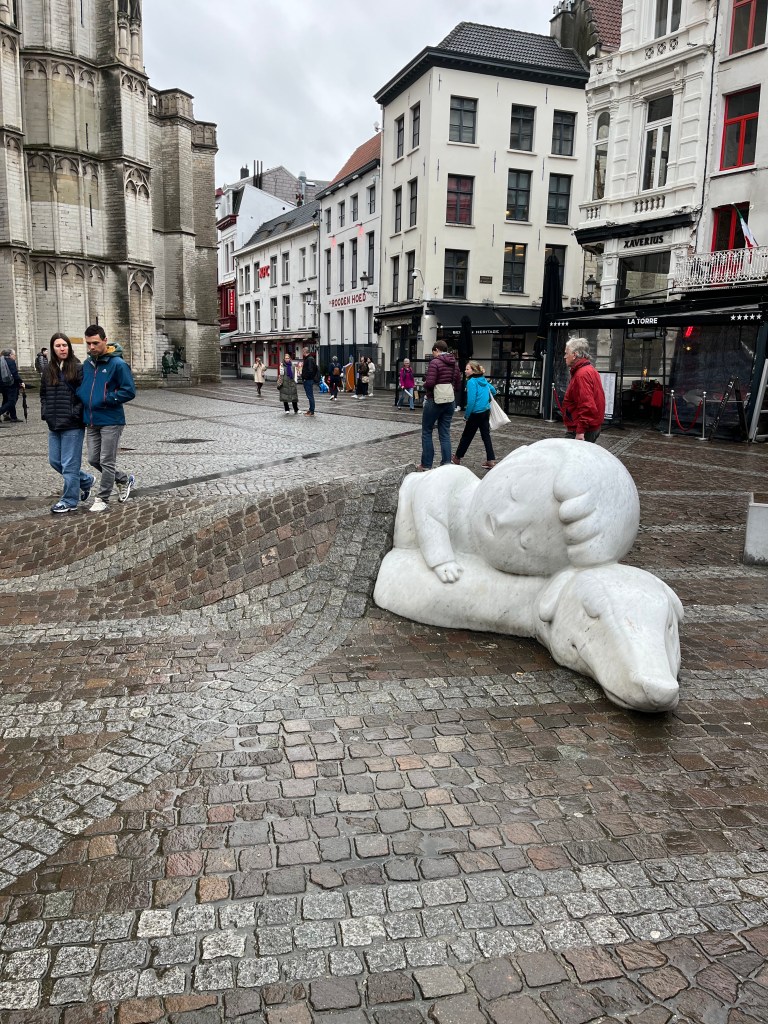
Nello & Patrasche are characters from the book, A Dog of Flanders, which takes place in Antwerp. Nello is a poor orphan boy and Patrasche is his canine friend without a home, so they explore Antwerp together. The statue, designed by Batist Vermeulen, lays right outside the Cathedral of Our Lady which plays an important role in the story. Whether you are familiar with the story or not, the statue is a worthy stop to get a glimpse of a bit of Belgian culture.
Things I Wish I Did
There is so much I wish I could have done in Antwerp. I really wish I could have visited some museums like Rubenshuis or one of its many art museums. I also really wanted to do St. Anna’s Tunnel, also known as the Pedestrians’ Tunnel that runs underneath the river Scheldt to the other side of the river where you are met with its famous wooden escalators. I highly recommend looking up some of these places before your visit Antwerp!
Brakel

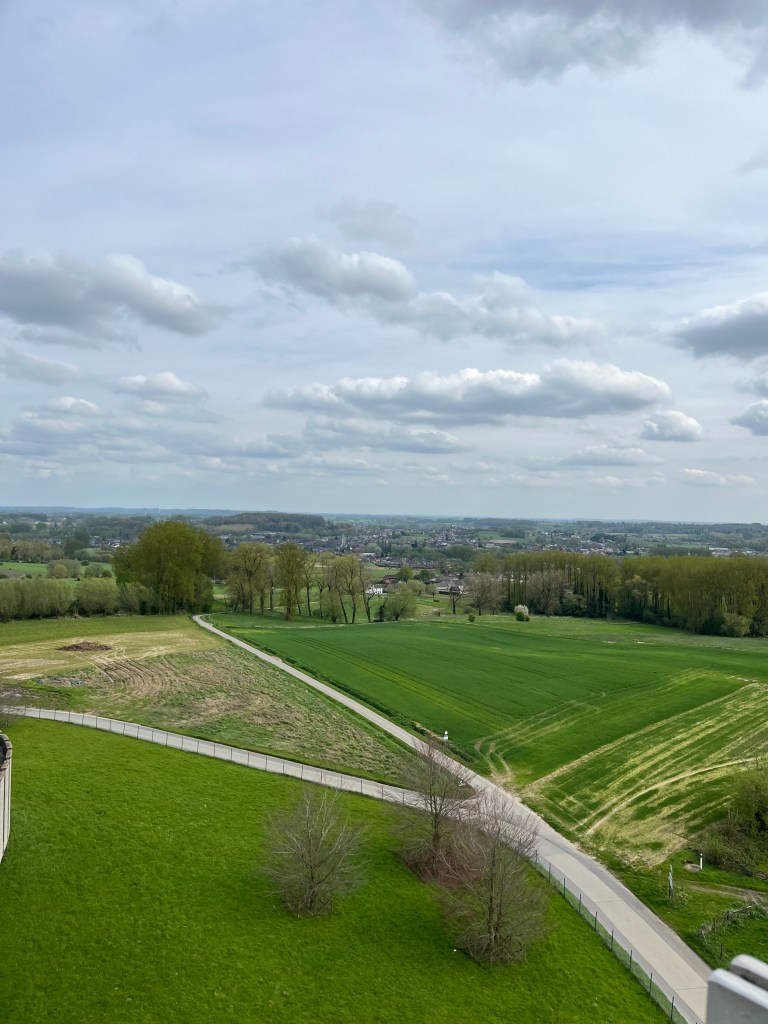
So Brakel is not a big city in Belgium, nor is it a tourist spot. It just happened to be where I stayed for the majority of my trip to Belgium, so I can’t talk about Belgium without it. It was a cute small town with an adorable market with delicious pastries and a bagpipes player. There is also a lot of great nature and park to enjoy, especially on a sunny spring day.
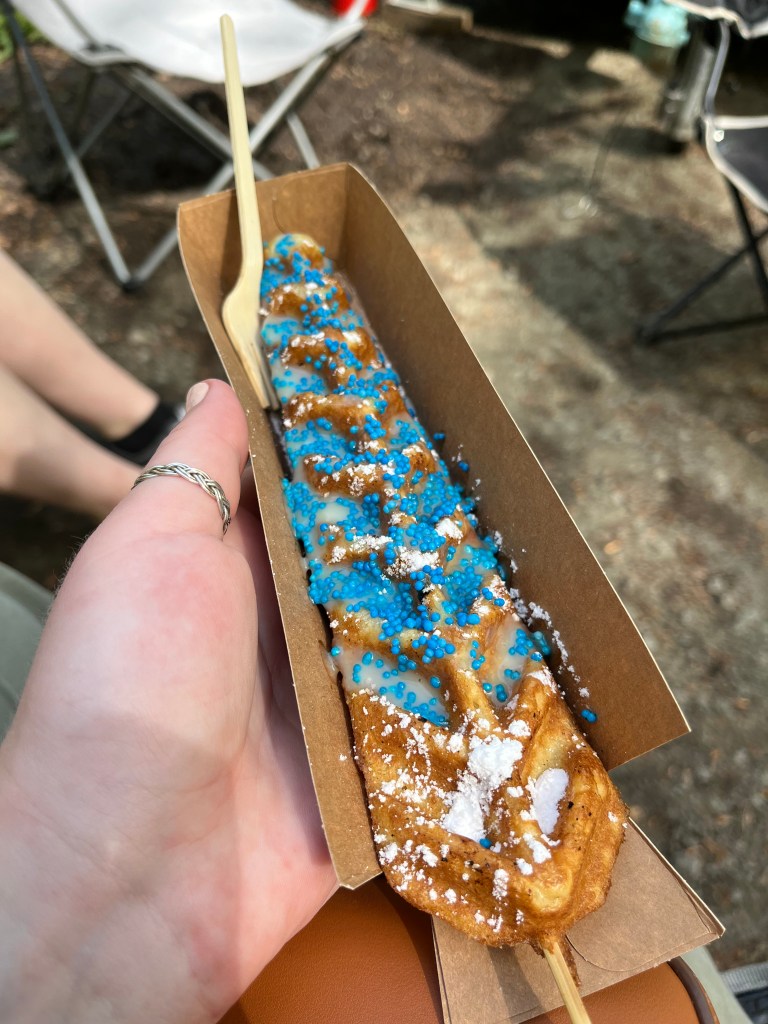
My favorite was going for a little walk by the border with Wallonia and enjoying an Aperol Spritz at the restaurant close by. Oh and of course the little waffle truck in the middle of the woods.
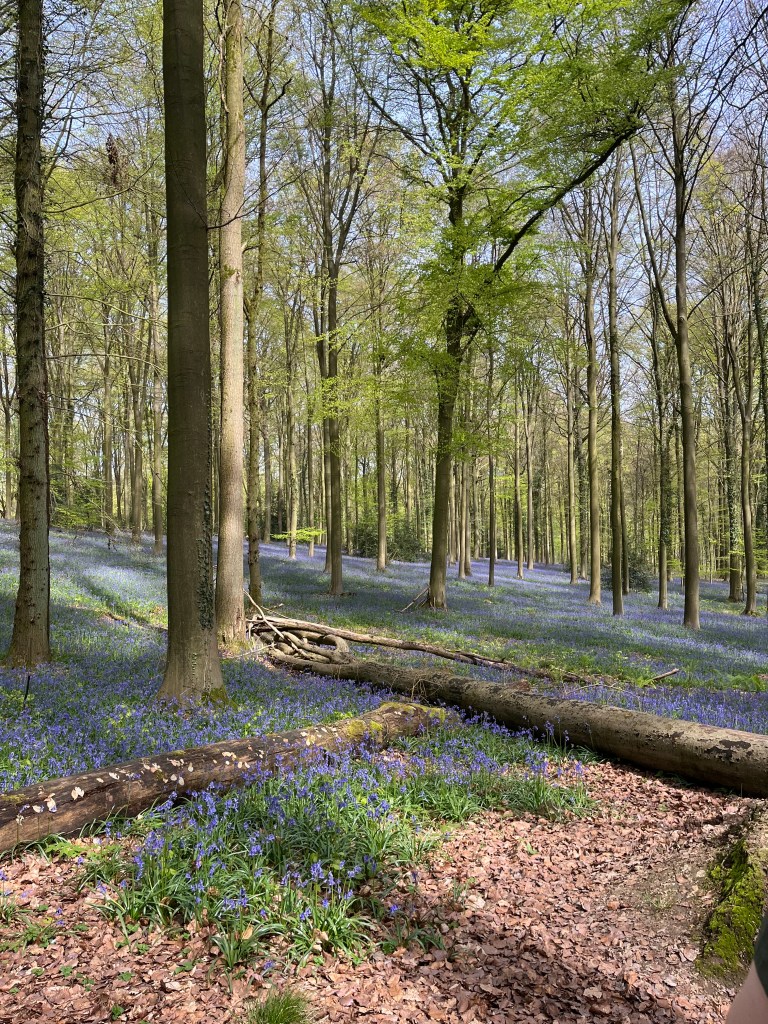

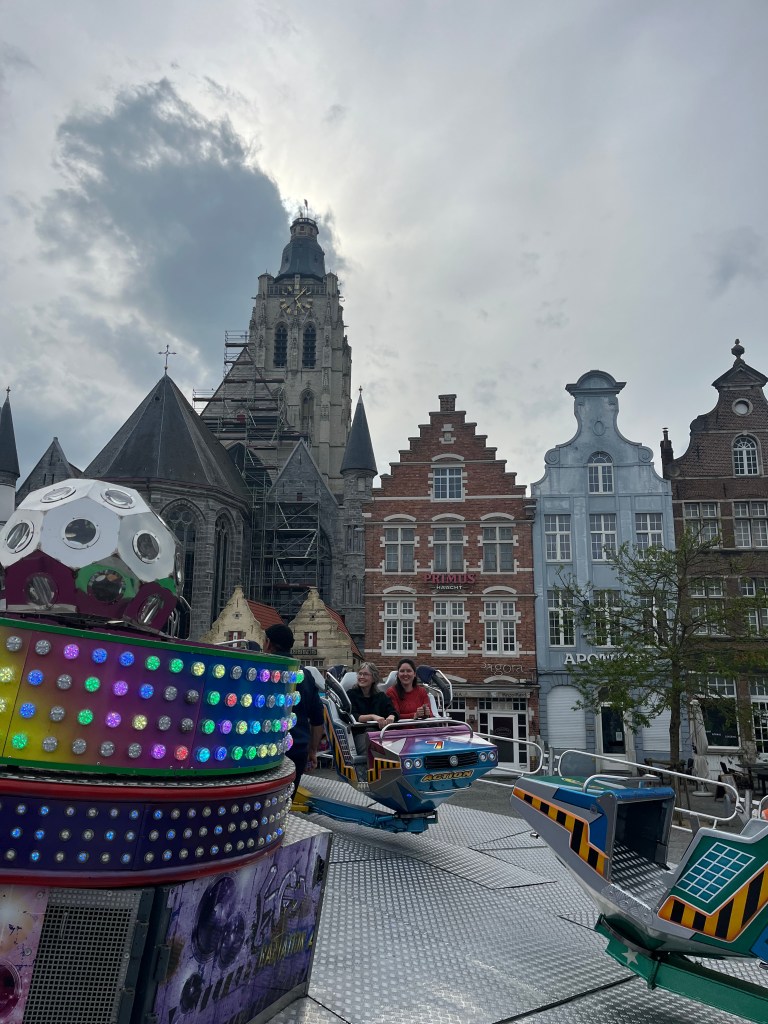
There are also a lot of other little towns near by to check out. I got in on some festivals like a nature festival as well as a fair with rides at another. Small town Belgium has so much to offer as well and it is a great chance to really get to know Belgium, its culture, and its people
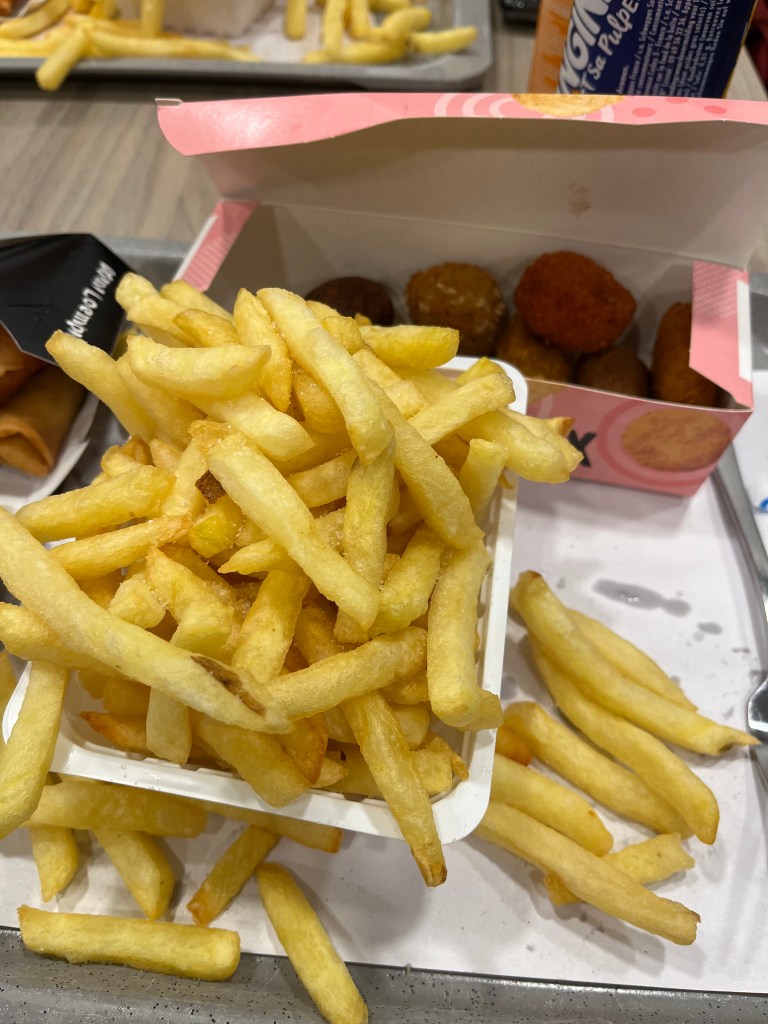
Brakel is also where I got to to go my first Frituur as I talked about earlier. I really wish we had those here. I love getting a plate full of fries and delicious dips and toppings and then different fried meat and concoctions I have never even heard of before, Sometimes I think about going back to Belgium just for them.
So Belgium?! Have I convinced you all? I really hope I have because Belgium is one of the most underrated places I have visited as well as one of my favorites. If you love fries, drinking, history and old architecture, rainy weather, and making connections with people, this is the place to go. Viola! Hope to see you in Flanders!

 The Journal of Wanderlust