
Last summer when I visited Germany for the Eras Tour, I also made sure to spend a day actually exploring Munich, since my time in Munich would only be limited to the fews hour that is the Eras Tour. My friend had to work during the week so I took those days as an opportunity to do some day trips. One of those days I went back to Munich.

The cheapest and easiest option for my to get to Munich was the Flixbus. I love taking the train in Europe and will default to them, but then Zoe mentioned the Flixbuses that leave from Stuttgart airport. I would just have to take another form of public transportation to the airport and then I would have my ride set for the next 2 1/2hours. It was a beautiful drive and it reminded me a lot of my first international trip and the bus ride between Berlin, Dresden, and Prague.
Once I arrived at the central bus station in Munich I bought a day pass for the trains since it was about a 30 minute walk to the city center and I did not want to waste a hour of my day in Munich just walking to the city center. Once I got to Marienplatz I took out my phone and began my Rick Steves city walk. If you don’t know what it is, it is an audio guided tour of the city from none other than Rick Steves and his local tour guide. All you have to do is go to the app Rick Steve Audio Europe and you have access to all of his Europe podcasts and his city walks. Plug in your headphones and then you are off. I have always wanted to do one of these on his app, but I have never been on a solo trip to any of the cities he has them for until now. Here are all the stops on Rick Steves city walk and how I made them my own!
Marienplatz
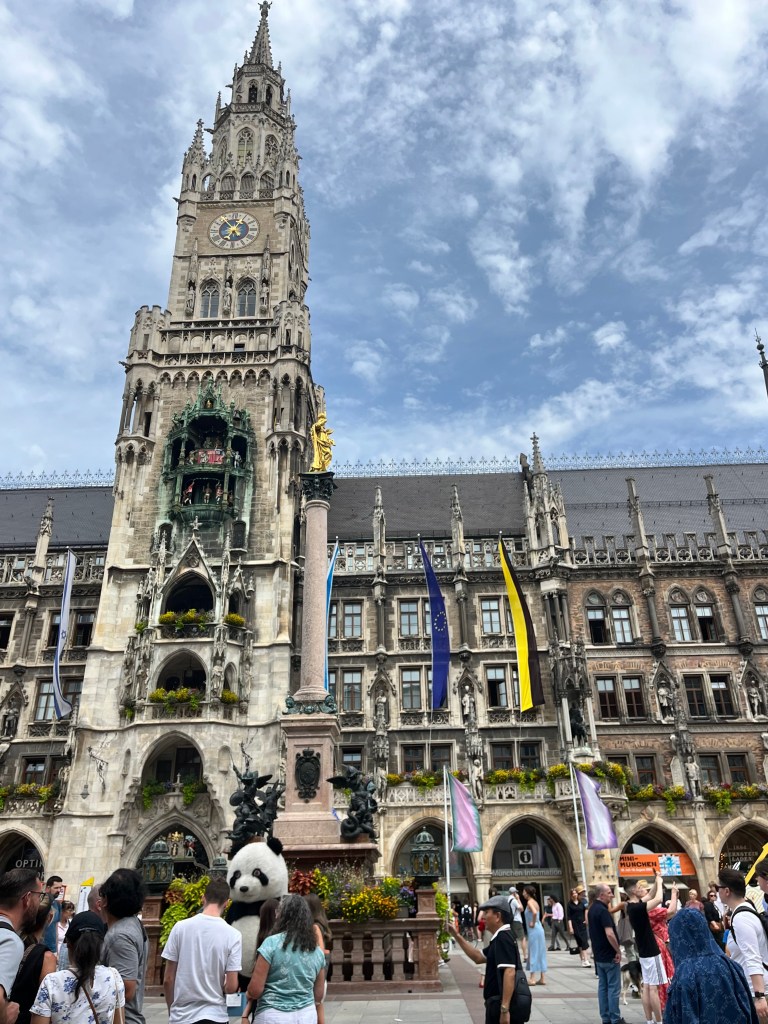
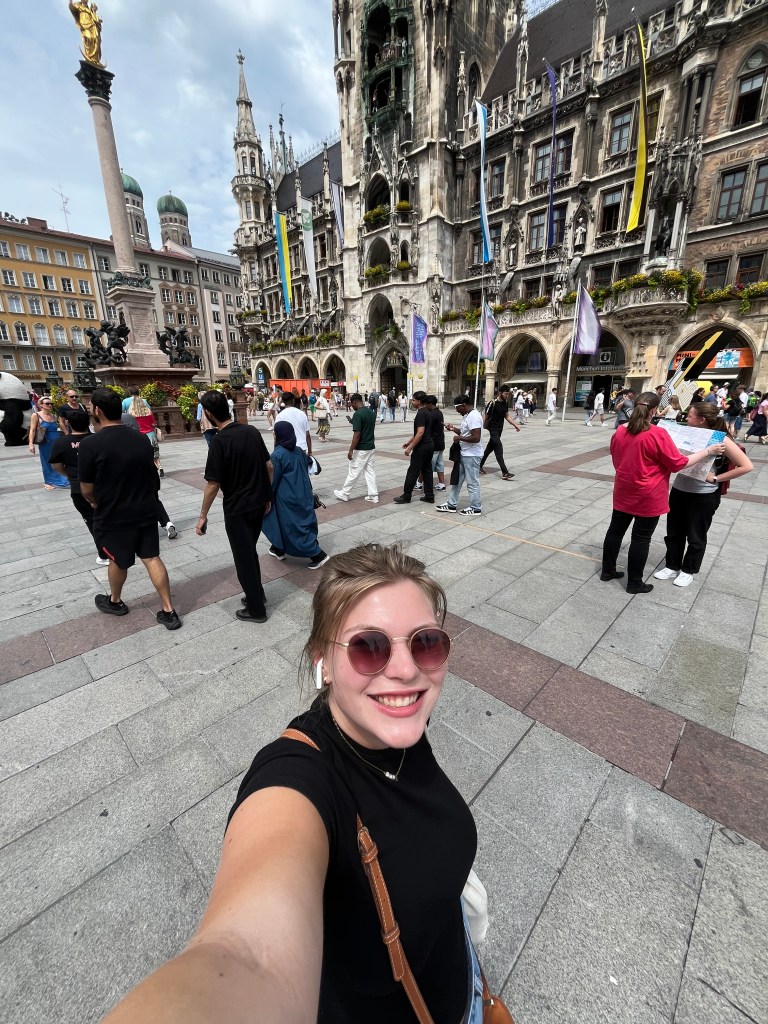
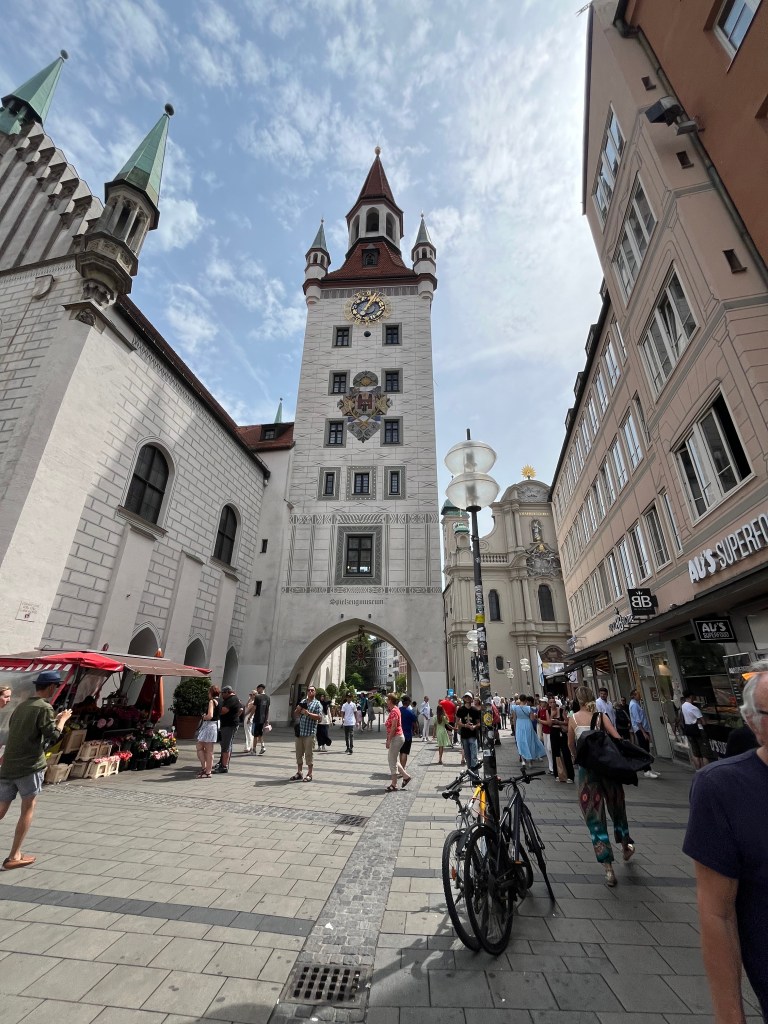
First stop was Marienplatz. Marienplatz is an U-bahn stop and also the bustling main square in Munich. Its new town hall, built in the 1800s, is probably one of the first things you think of when you think of Munich. Its well known for its tower and glockenspiel, with its chimes and statues. The square is also home to the Old Town Hall which played a role in World War II as the sight of Kristallnacht. Many of the buildings in this square were destroyed in WWII and then later rebuilt. This is very common for many of the countries and cities in Europe that were bombed during the war. Usually they are rebuilt just as they were so you probably wouldn’t even be able to tell unless someone told you, just like Rick Steves told me.
St. Peter’s Church

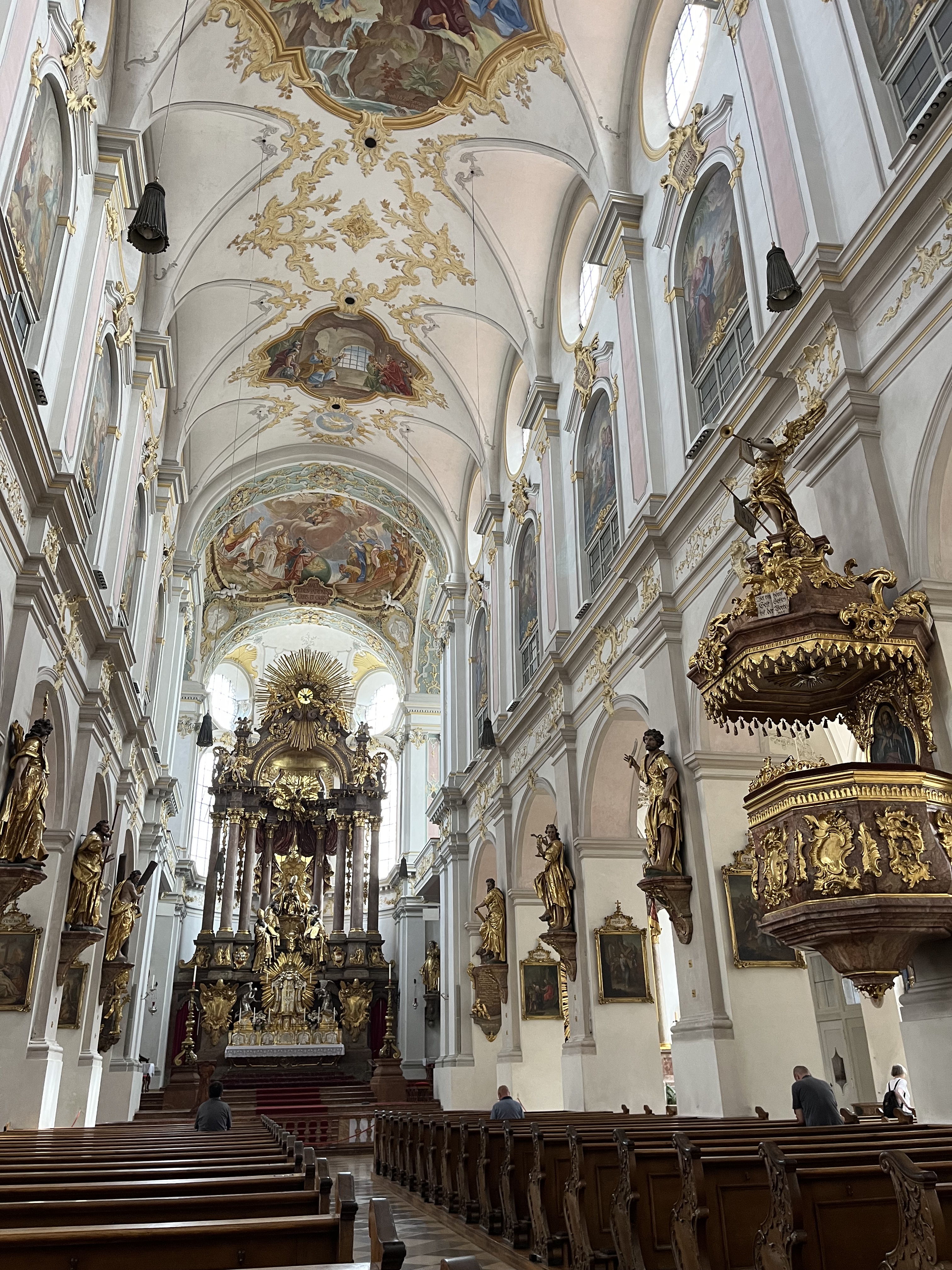
The next stop on the tour was St. Peters Church. St. Peters Church is the oldest in Munich dating back to the 1100s as a monastery. Its time as a church started in 1368. Bavaria is a predominantly catholic region of Germany, as each state differs. This makes Germany different from other European countries which usually as a whole are predominantly one religion or the other. This catholic church was also restored after World War II. Many of the interior pieces were rebuilt based off photos while others survived due to sandbags. Its interior is definitely more marvelous than the exterior. Its gothic statues and altar really made the stop inside worth it.
Viktualienmarkt
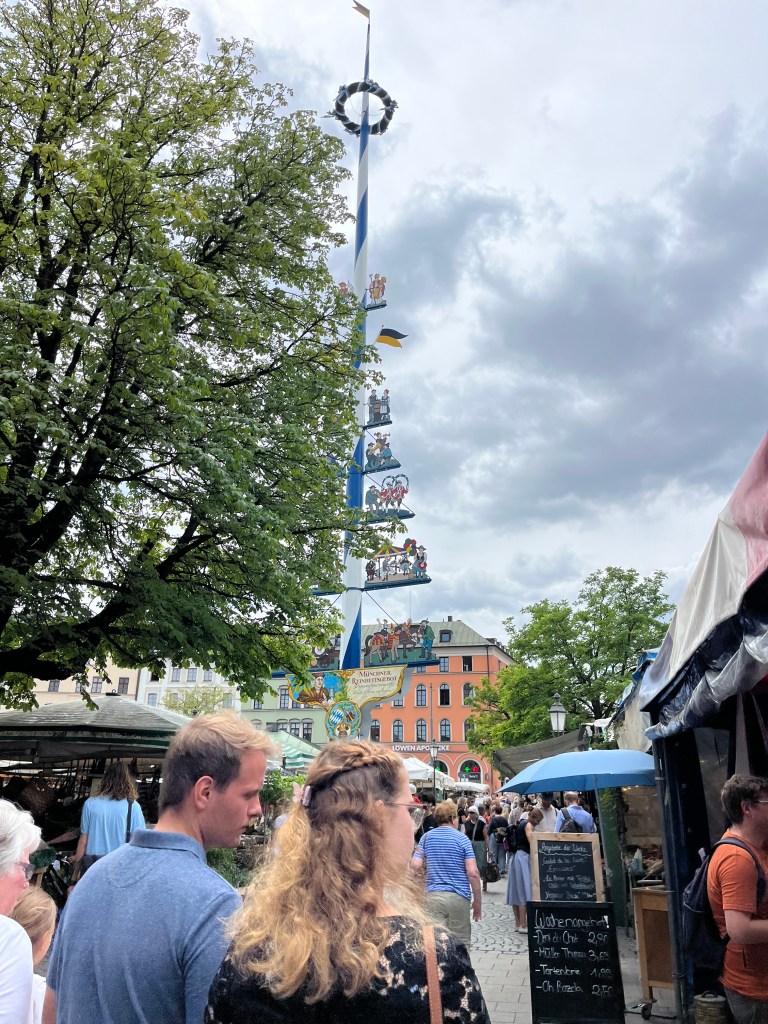
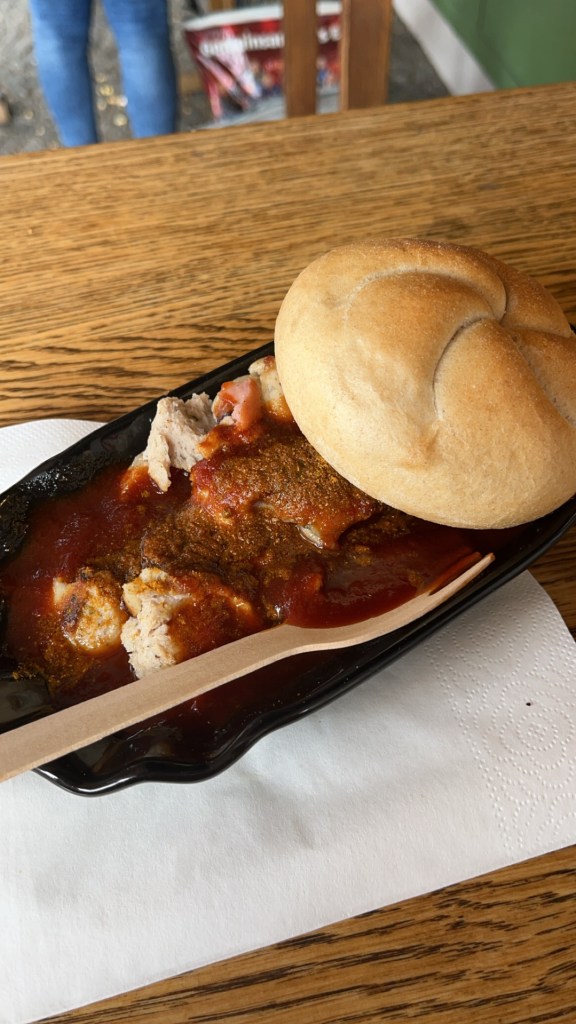
After exiting the church I headed over to Viktualienmarkt, the big market in the center of the city. It is full of little shops of local artisans, produce stands food stalls, and biergartens. The maypole marks the center of the market which is a very common structure to find in the city centers of Bavarian towns. This maypole shows what vendors are in the market with its decorations. If I wasn’t alone and had a bit more time to spare I would have stopped for a beer for a true German biergarten experience, but it was really busy and I am not quite extroverted enough to do that by myself. Instead I peeked into the stalls looking for souvenirs. I kind of struggled to find how to pay at one of the shops I wanted to buy from so I ended up going to more of a souvenir store in the market. I got my usual postcard and magnet for myself and then some pretzel coasters for my little brother, because he loves pretzels and I was in the true land of the pretzel. I also came back to the market later in the evening for some food. I got a curry wurst served with a roll. I love curry wurst or really anything with curry! I also got a kick out of the young woman taking my order who thought I was Russian because of my eyes. We had a fun little talk.
Jewish Synagogue

The Jewish Synagogue was close by the market. I have not seen many synagogues in my life, so I am not sure what I was expecting but it was not this. I was really surprised by this modern cube building. That is until Rick Steves told me that during World War II Hitler ordered the synagogue to be destroyed. The one that sits here now is from 2006. The stone wall is also supposed to resemble the wailing wall in Jerusalem and the writing on the doors represent the 10 commandments. Understanding what everything represents makes it that much cooler of a building. There are also a couple museums in this square but I did not go to any of them due to wanting to see everything in my limited time in the city.
Asam Church

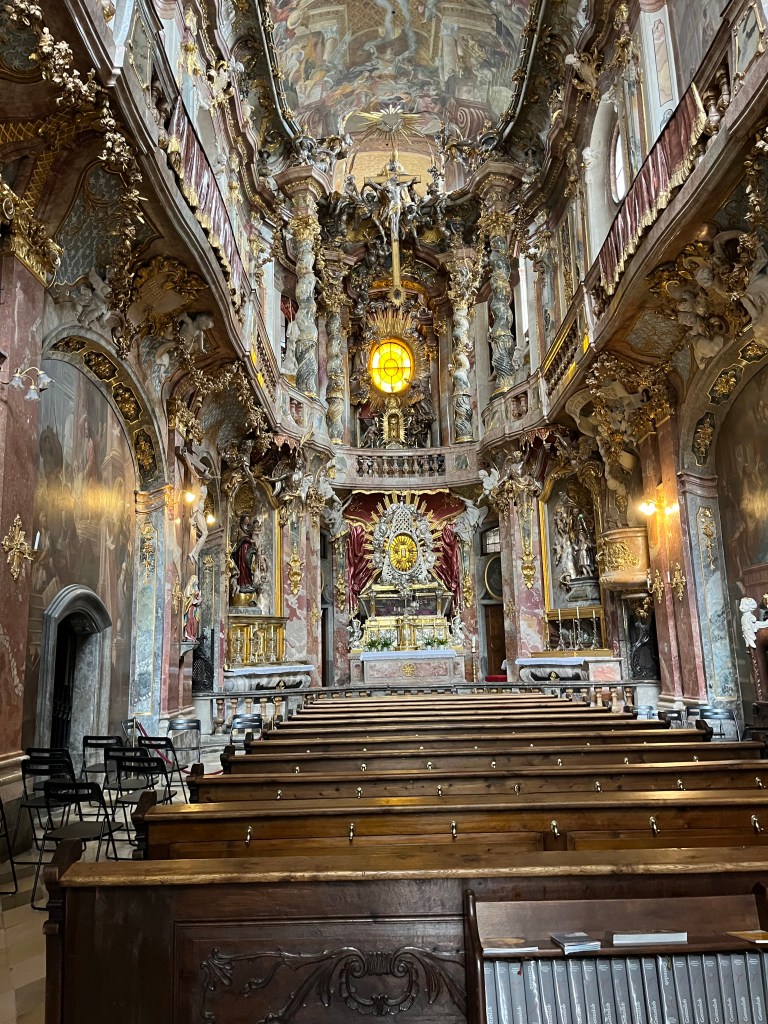
This next stop was probably the prettiest church I had ever been too. I was so sad that there was construction and I couldn’t go too far into the church, because what I could see of the interior was awe-inspiring. I love the beautiful old cathedrals in Europe, but something about this small church made irs architecture and decor stand out that much more.
Sendlinger Strasse
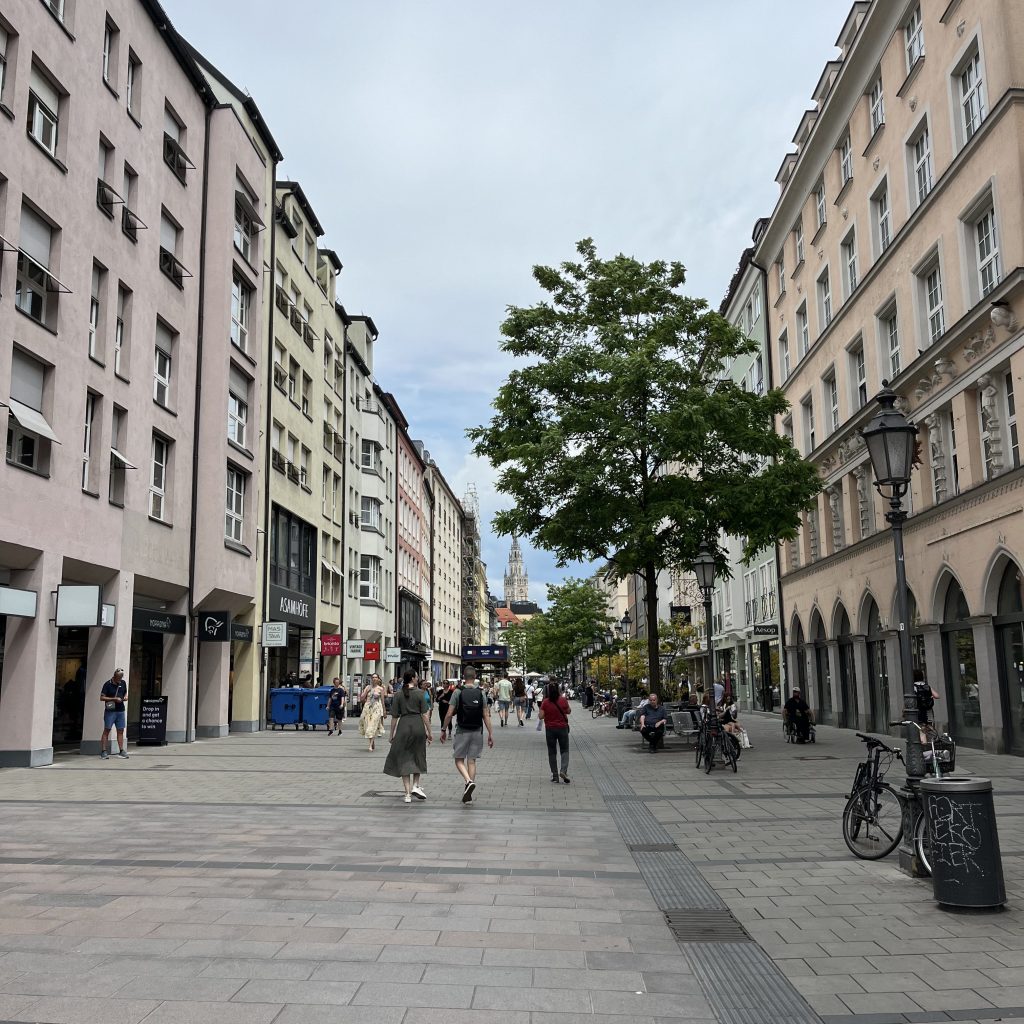
This street runs from Asam Church back to Marienplatz as it turns into the pedestrian walkway, Rosenstrasse. On this walk Rick Steves explained the history of Munich and its balance between old and modern.
Kaufingerstrasse
Kaufingerstrasse embodies the more modern side of Munich. Another pedestrian street, Kaufingerstrasse is the shopping district of Munich. The street is lined with big department stores. You can find some upscale stores but you can also find more afforable German staples. I love some German H&M! This has always been the main shopping street in Munich, but it has been more modernized than other parts of the city. This part of the tour is when I got off track a little bit.
I was in desperate need of a phone charger because my phone battery was draining pretty quickly after the long bus ride and using my Rick Steves app. I alway have a power bank and a phone charger with me when traveling (because I have a fear of being stuck in a foreign country without my phone.) My phone charger stopped working though, so I followed Kaufingerstrasse some more until I hit the big tech store Saturn. This was an interesting experience because these were one of the stores where you wait in line before all the check out counters and an announcement tells you when one of the counters is open. With my limited knowledge of German I was able to pick out the number 7 and went to that counter. I was really proud of how I got through that without having to use any English. And I was finally able to charge my phone, so I could get back on my tour and head to Frauenkirche.
Frauenkirche

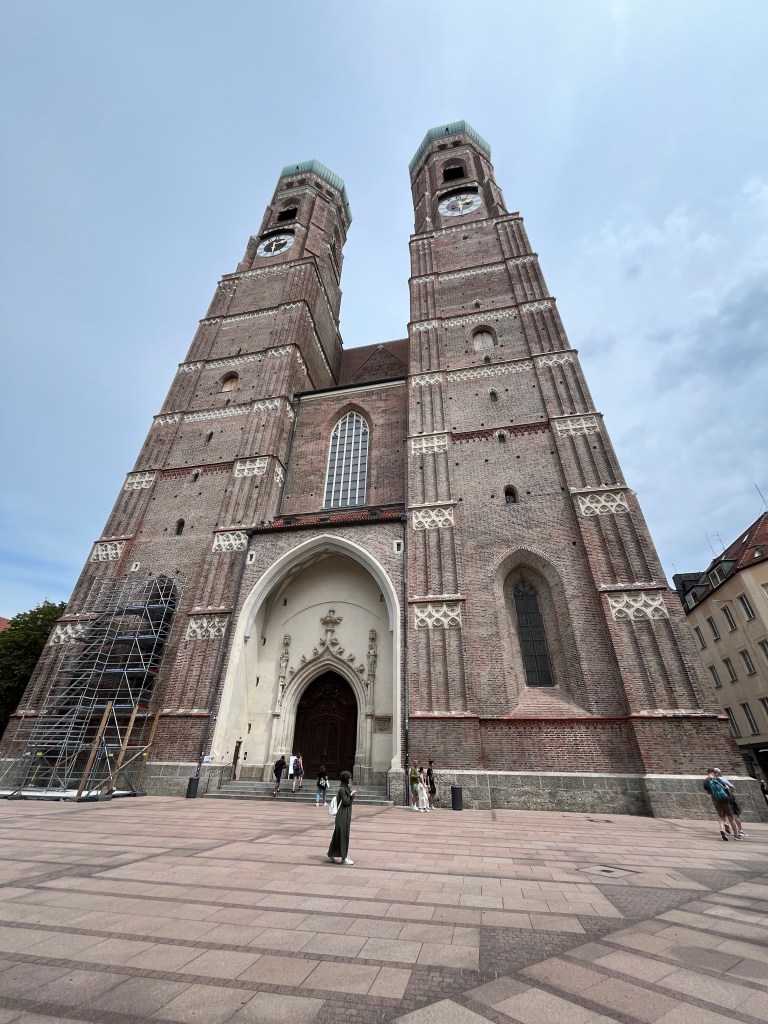
One of the best views in the city is the walk from Kaufingerstrasse to Frauenkirche. After enjoying some Caribbean music I found my way to my next church. ‘Frau’ is the German word for woman, which makes this church dedicated to Our Lady. This church was built in the 1400s around the same time as much of the old city including the old town hall. The church is unique with its two domed spires, which were not apart of the original design. Fun fact: before heading to the Vatican, Pope Benedict XVI, a Bavarian native, was Archbishop of this very church. You can go inside of the church, as it is part of Rick Steves tour, but I did not find it quite as fascinating as the other churches in Munich.
Frauenkirche to Marienhof
After a little walk from Frauenkirche to the back of the new town hall, I had reached my next stop Marienhof. This square is a park surrounded by old buildings. Sadly when I was there it was under construction, so what should have been a cute little square tucked away in the center of Munich was really just a construction site.
Dallmayr Delicatessen
The next stop along Marienhof was one I probably could have done without but it was a part of the tour and I am sure for some people it is an important stop. It is an upscale delicatessen, selling cold cuts, cheeses, and prepared salad. They have a wide selection of foreign foods as well a fine dining. Although I wasn’t really looking to buy anything, I thought it could be fun to look through the desserts and other European specialities, but I just found it to be a bit crowded and kind of difficult to browse. Maybe if I wasn’t alone I would have bought something to share with someone, but I didn’t really have the desire to buy anything and I felt a little out of place at something so fancy.
Platzl and Medieval Munich
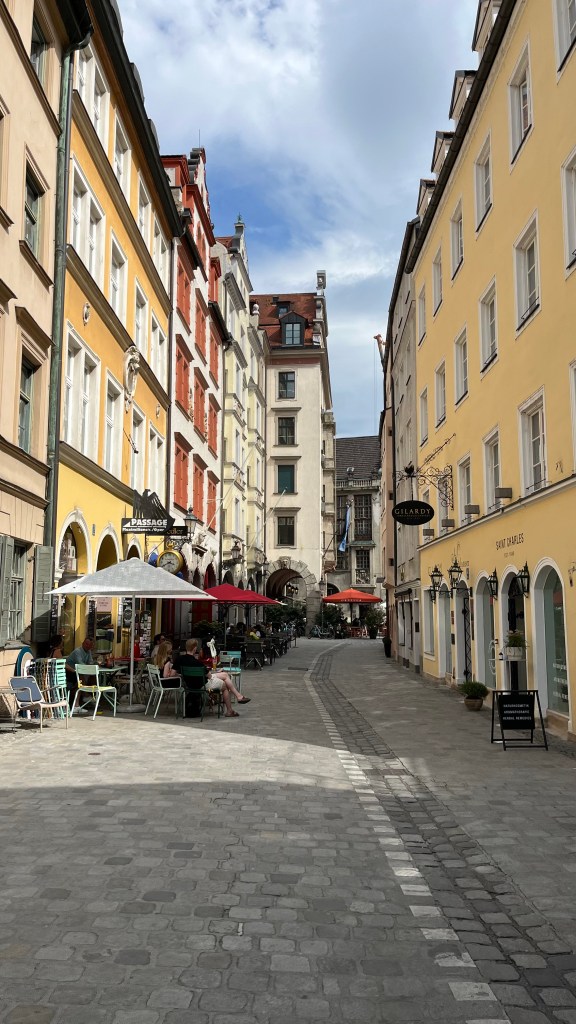
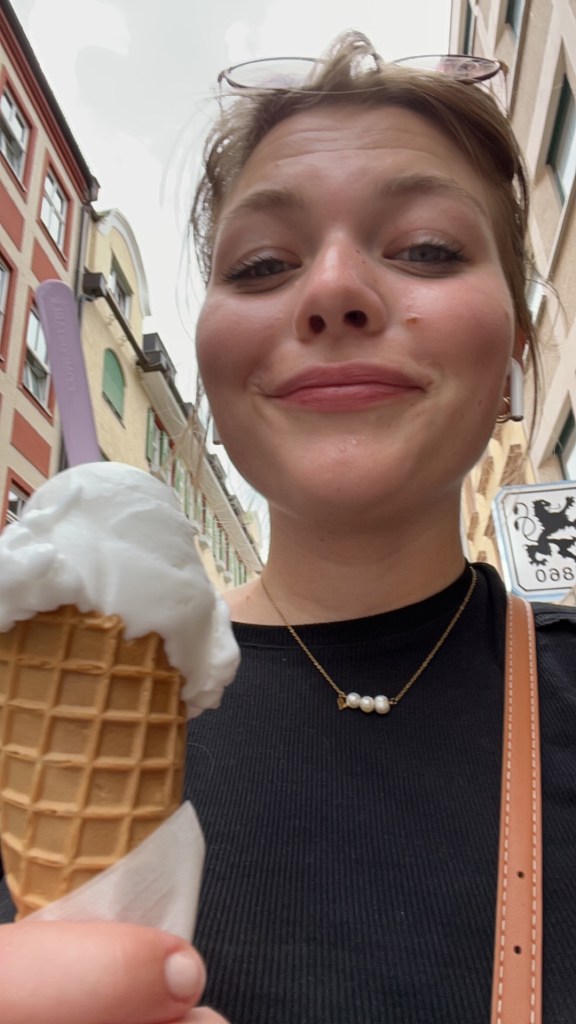
This next stop was my favorite part of Munich: the medieval neighborhood. After WWII this part of the city was rebuilt to look just as it would in medieval times. I took a little detour from the tour to walk around a bit. It felt a bit more secluded and not quite as busy as the main square and shop street of Munich. The walkway felt smaller and the people more scarce. Although there were still tourists, it felt like you could breathe as it was more relaxing. After walking into Hofbräuhaus I grabbed gelato from a little shop and found a bench by a fountain to sit and eat it. It was so nice!
Hofbräuhaus

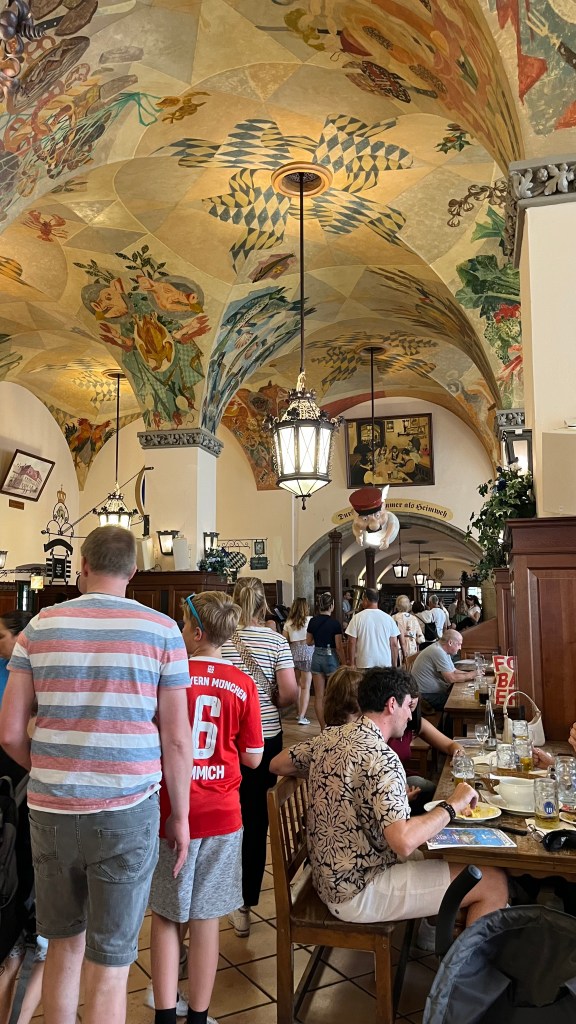
I am all for getting a drink at a beer house, but I still haven’t gotten comfortable enough to go into busy places and drink on my own. I wouldn’t even know what to do with myself and I also get slightly nervous drinking along as a female solo traveler. I only do it when I feel somewhere really safe. It felt too busy in Munich to do that. That didn’t stop me from going inside and taking a look at the world’s most famous beerhall though. This is what you picture when you think of Bavaria and Oktoberfest. I enjoyed the old traditional German decorations and the paintings on the ceilings. It is probably a bit stereotypical German with its lederhosens, steins, and beer maids for the tourists, but it does hold some significance for Bavarians. ‘Hof Brau’ does stand for royal beer, so this is the place to get beer in Munich.
Maximilianstrasse
This is the point in the tour where I felt like I was leaving old traditional Munich and entered a more typical European city with its 1800s style buildings. This street is named for the 19th century king, Maximilian. This is where the wealthy visitors go with its expensive stores and fancy hotels. At one point I really was questioning myself and how I fit in here. It was not my scene.
Max-Joseph-Platz
After strolling along Maximilianstrasse for a bit I reached Max-Joseph-Platz. The statue in the video is of King Maximilan and in the background you can see the Residenz to the left and the National Theater to the right. The Residenz was the home of the royal family. I walked into the Residenz in hope that maybe I could get a tour, but I discovered it would be closing soon so I would not have nearly enough time and that wouldn’t be worth the price of a ticket. Another note, the National Theater was created by Maximilian, which was one of a number of things that made him a popular king, hence why he has his own platz.
Residenz

Even though I did not tour Residenz, I did walk down Residenzstrasse a little bit until a found the entrance to the courtyard. Even though it was not the same as touring the entire building, I was happy to just get a little bit more of the pretty palace.
To Odeonsplatz via Viscardigasse
Viscardigasse is a little street that connected Residenzetrasse to Theatinerstrasse behind Odeonsplatz. I would like to note the historical significance of this area without giving notability to Hitler and the Nazi party. Munich is where the Nazi party really took root. It was these streets that Hitler and his men marched down in a coup attempt that was shot down by the police. Sadly this was just the start of Hitler and while he was imprisoned for this event he wrote Mein Kampf. Later he would be successful in taking over Germany and honored those that died here in his first attempt at power with shiny cobble. All of this I learned from Rick Steves. I love history, but can never really remember anything, so I was happy to have his voice in my ear reminding me of all the history I had forgotten.
Odeonsplatz
In Odeonsplatz there were a few notable stops. The first is the Theatinerkirche. This Baroque church is home to the tombs of many of Bavarian royal family, the Wittelbachs. Adjacent to the church is the Hall of Heroes that honors Bavarian generals. Across from here you can see the stretch of Ludwigstrasse. Then at the end of Odeonsplatz where it meets Ludwigstrasse is the entrace to Hofgarten, the last stop of the city tour.


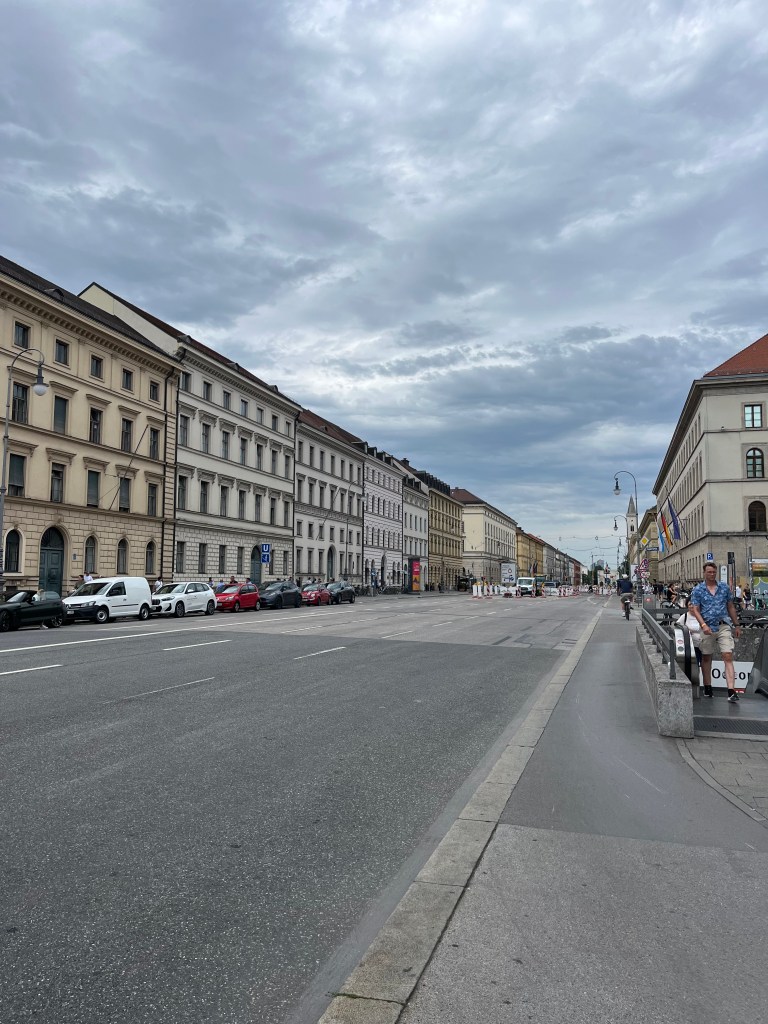

Hofgarten
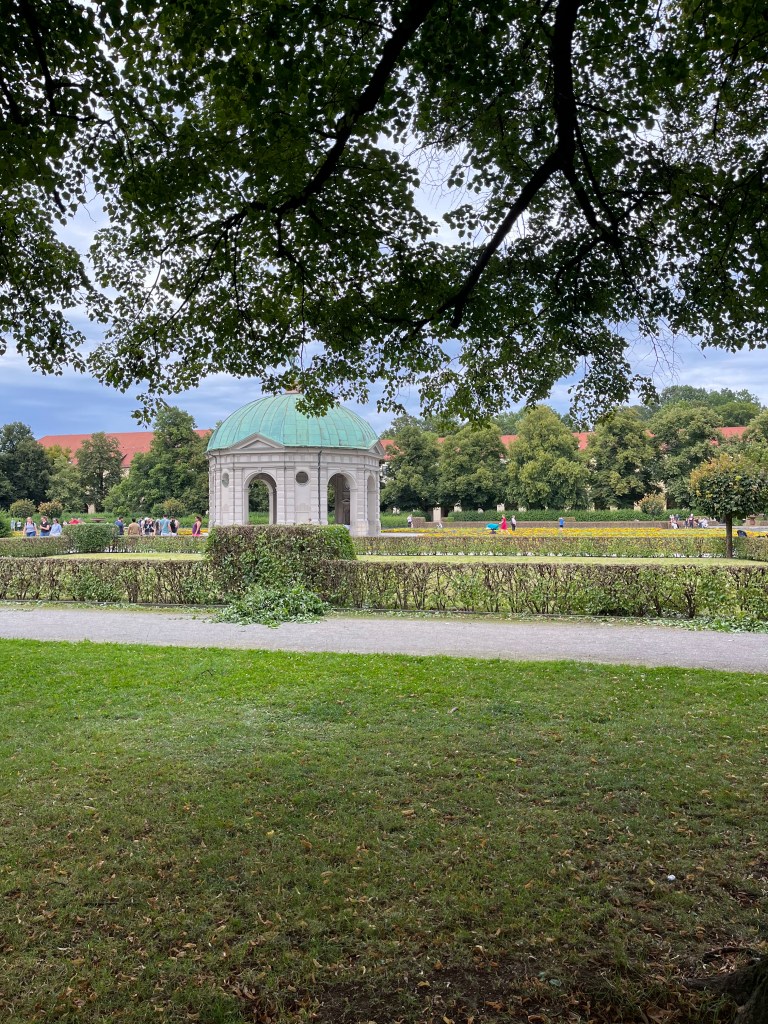
The last stop on the Rick Steve’s Munich city walk was Hofgarten. This is the royal garden. While not the most beautiful garden I have been to and not nearly the most impressive in Germany, it still is a nice break from the bustling city. It is not very extravagant and rather is a lot of open grass like a city park. It is also fun to see a glimpse into the lives a locals. From those going on their daily jogs or walks, to couples sitting together on the benches, this garden definitely is a spot for locals as well a tourists. In the center of the park lies the pavilion which has been here long before many of the surroundings with its renaissance style. After I walked through it and around the garden on the pathways I took a moment to sit on one of the benches to take it all in and of course people watch. I also tried to figure out what I would do with the rest of my time in Munich.


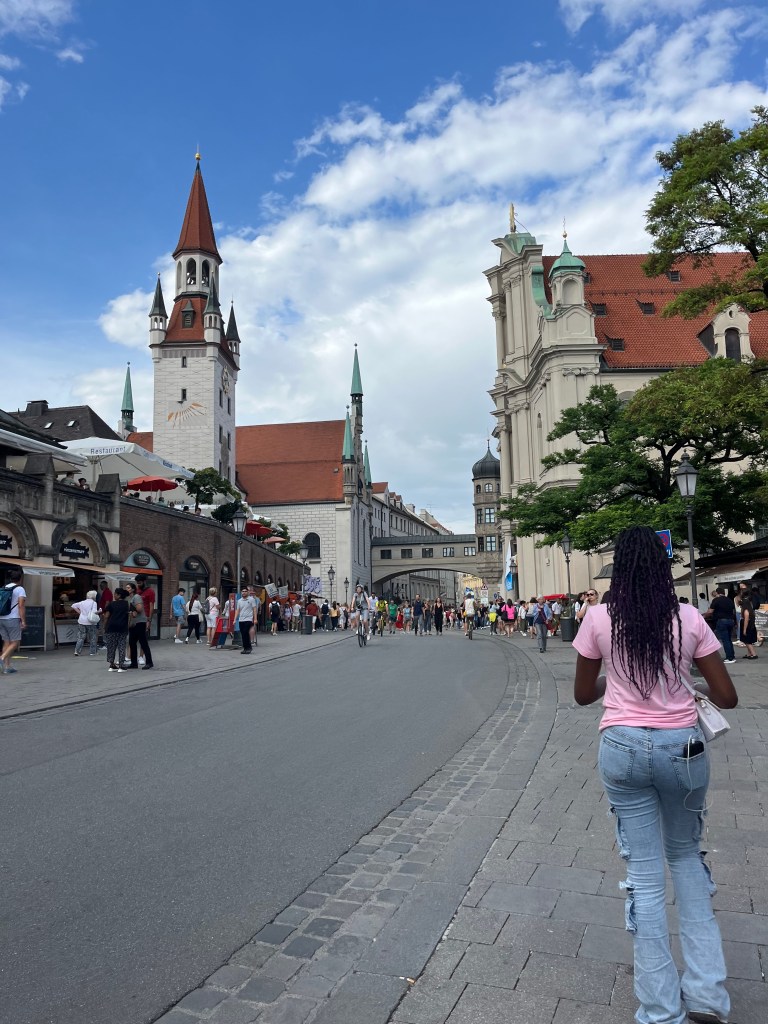
I ended up walking back to Marienplatz and then to Viktualienmarkt to grab a bite to eat. I used the rest of my time to check out things I didn’t take the time to do during my tour. This included stopping at the church close to the market, Heilig Geist Kirche. This gothic church started as a chapel and hospice in the 1200s and served the more poorer population of the city. During the time of King Maximilian in the 1800s the hospice was torn down and now it serves as a regular parish. I really liked this church a reccomend making a stop here. I was in love with the ceiling and the paper birds hanging down from it

After about 5 hours spent in the city, it was time to head back to the bus station. I had a very confusing time finding the U-bahn back to the station, so after a few minutes of panicking and asking some very helpful locals I was on my way. Before getting on the U-bahn in Marienplatz I stopped at one of the food stands to get a snack for on the way home. This is how I discovered Mohnschneken, a German poppyseed roll. It was so delicious. I have since tried to make it at home, but its not the same.
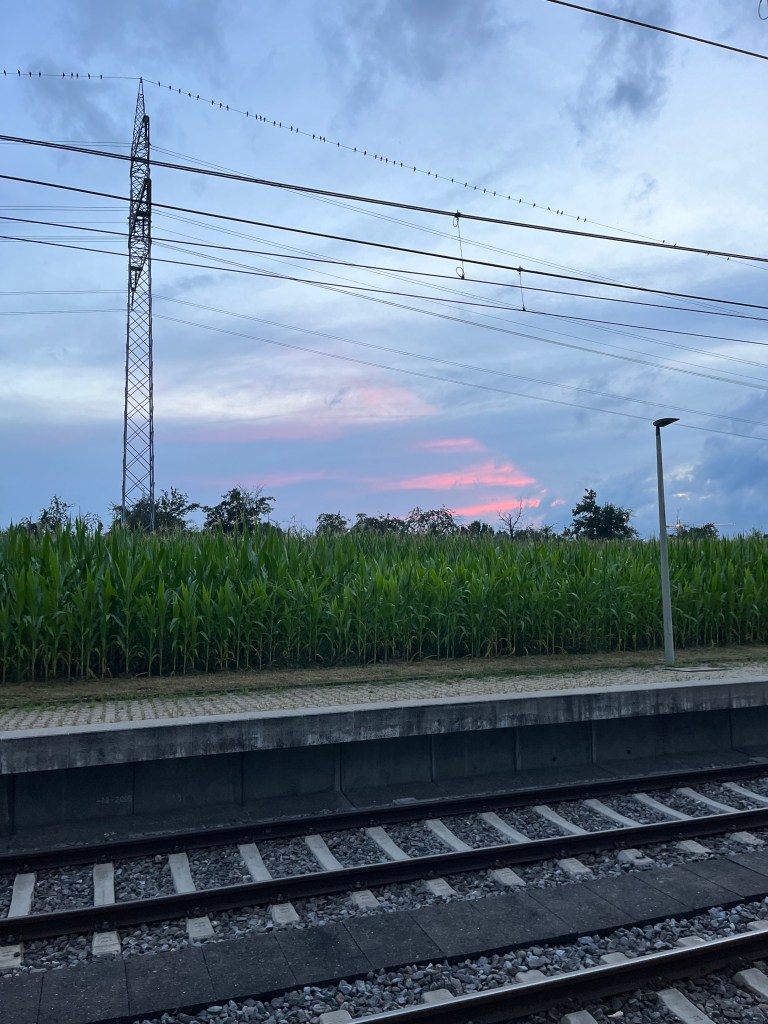
I arrived back at the Stuttgart airport around 9 pm. I had one last step, getting the bus or U-bahn back to my friend’s house. I may have messed up slightly, because this time I decided to take the U-bahn, which was a bit of a walk from the bus drop off. I found that I would need to take the U6, but this is when I learned to always look at the stop name it has at the top (which is its last stop), because the one I got on only went only part of the way. After an announcement I got off at the last stop with a couple of other confused passengers and waited for the next one to come that would take me the rest of the way. It felt like I was waiting in the middle of nowhere. I had to keep reminding myself that it is Germany and it is safe, but it definitely was weird waiting next to a corn field with only a couple people for the U-bahn. It all worked out though and I did make it back ok. And I still had time to plan my day trip for the next day.
I really liked mixing up my day trips with a tour. I don’t normally want to spend the money to do a tour, especially when I am doing a day trip and have my own things I would like to do. For a city like Munich this worked out well, because there are some spots that I wouldn’t have even thought to check out of my own and I wouldn’t know the history of them either. I really liked the Rick Steves city walk because it was free and I could pause it to do my own thing if I wanted. I will definitely be using more of this on my solo trips, well at least for the ones he has city walks for. As for Munich? I have been to Germany a few times, but this has been the most German it has ever felt. Bavaria is what we think of when we think about Germany, so it was fun to be somewhere so stereotypical German. I would like to go back some day with friends though and check out more of the beer gardens and beer houses!
If you haven’t already, check out my story time about going to the Taylor Swift concert in Munich and be sure to keep a look out for more Germany posts, because I have a lot of experience to share!

 The Journal of Wanderlust