
Bonjour! Bienvenue à Québec! Have you ever wanted to visit France, but Europe was a just bit out a reach or maybe the thought of traveling to another continent is a bit daunting. Let me introduce you to one of my favorite places in the Americas. You may have came across my post about Montreal. During this trip when I was 16 year old, I also spent a day and a night with my family in Quebec City which is just a 3 hour drive east of Montreal. I loved Montreal, but I instantly fell in love with Quebec City. It was a much smaller city that has kept a lot of its old town alive. I felt like I was not only transported to France, but to 1700s France as the people really play into their French history. We had decided on a tour of the city in which our guide dressed from the time. As a teenage history nerd I was so excited for this and luckily it lived up to the height. Here is how our tour around Quebec City went and why this is my recommendation for experiencing Europe in the Americas. This is French Canada after all.
Old City Walls


Before we even started our tour we found a place to park and then walked into the Old City through the ramparts. While they have gone through many changes throughout the years, these walls date back to the late 17th century when the British began their conquest of Quebec and Canada. While they are no longer used as defense, they still exist today to welcome visitors into the Old City at one of the four city gates. We entered at Rue St. Jean and followed the street to where we would find our tour guide. These walls enclose the only fully walled city north of Mexico. I guess that is just something we never created in the US, which is what makes it so cool and unique.
Rue St. Jean and Its Side Streets
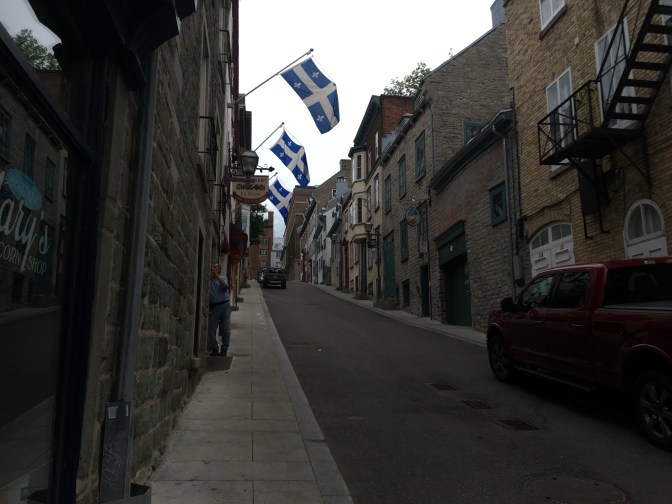
Rue St. Jean is the beautiful and scenic main street of Quebec City that we took after entering the city walls for a few block. This street is full of cute shops, pubs and restaurants, and historical sites. The fun flags and banners hanging over the street matched with the stone buildings really makes you feel like you are in an old French colony. You’ll find that is mostly is a pedestrian street aside from the few cars that circle through the smaller roads.
Notre-Dame de Québec Basilica-Cathedral
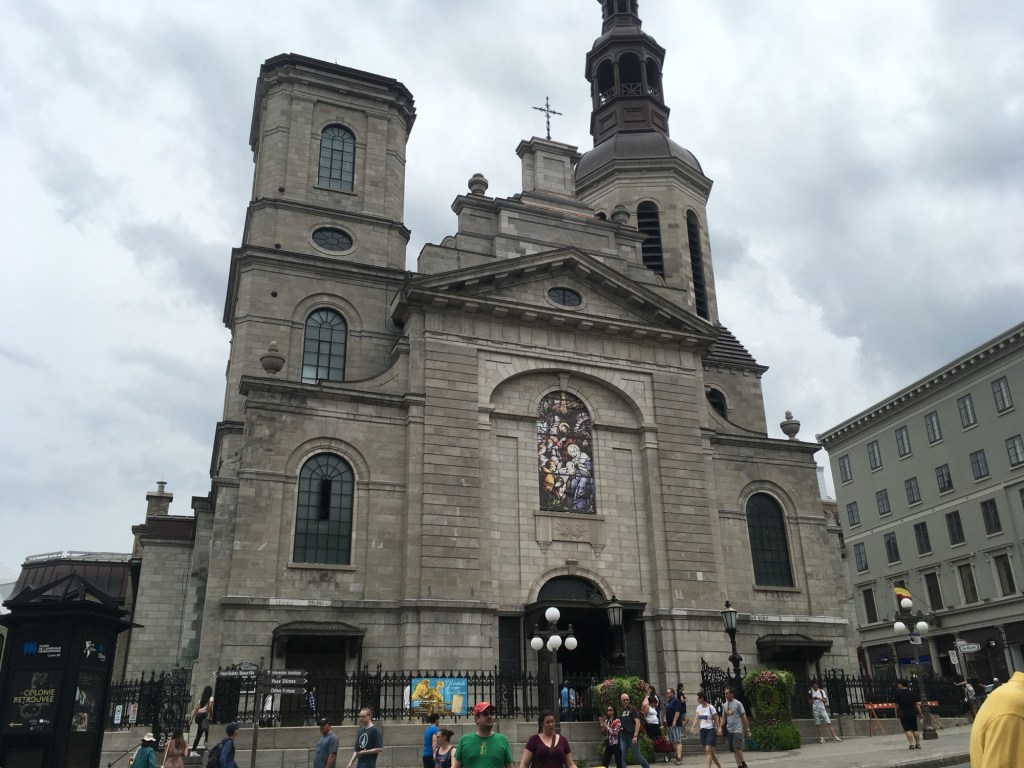
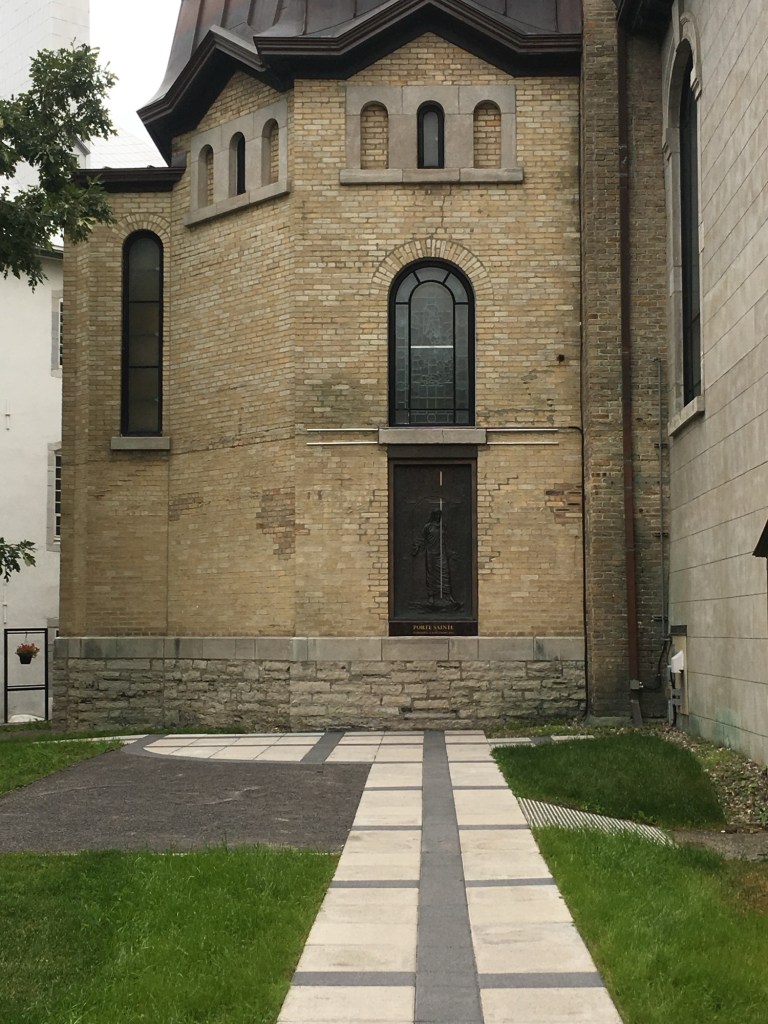
At the end of Rue St. Jean is the city’s beloved cathedral. Here is another title that the US missed as Notre-Dame de Québec Basilica and Cathedral is the largest Catholic Parish North of Mexico. It is a 17th century cathedral that is the first to be a minor basilica in Canada. While we didn’t go inside, the interior is just as if not more beautiful than the exterior. What we did get to see is the Holy Door located on the side of the building. It is the only one outside of Europe, which makes it a really big deal. On top of all of this it is a National World Heritage site, making it a can’t miss stop in Quebec.
Fairmont Le Château Frontenac


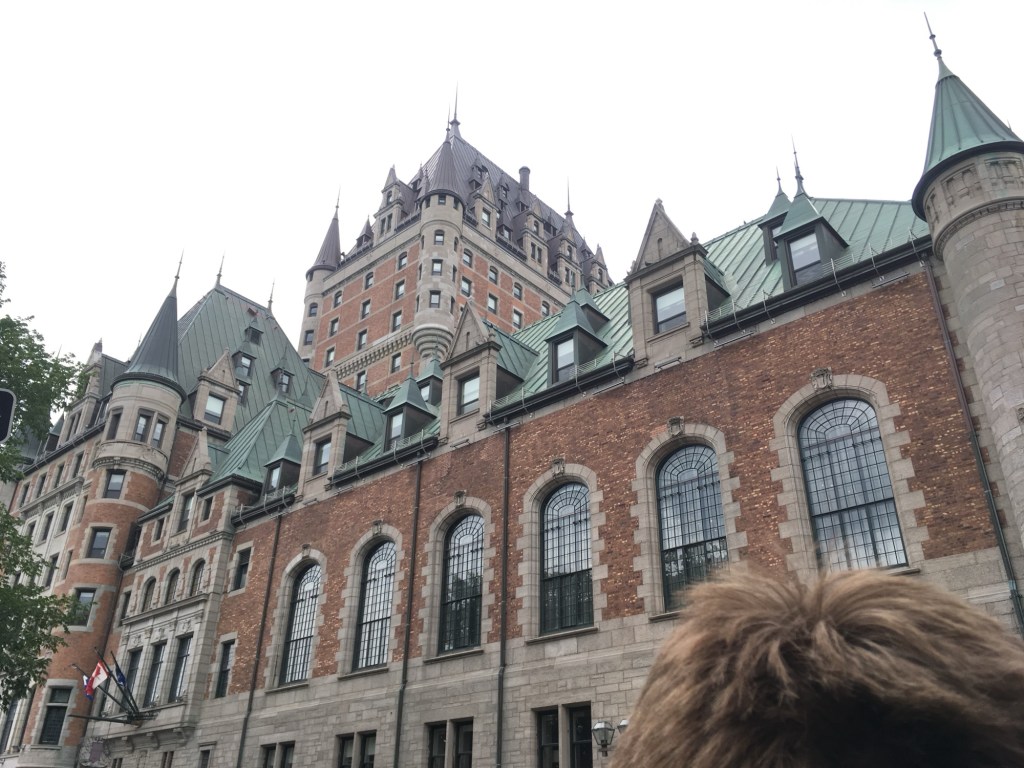
From the Cathedral we found our way to Château Frontenac, THEE symbol of Quebec City. It was built in the 1800s by the CEO of the Canadian Pacific Railway as a way to promote luxury travel (which isn’t really my thing, but one can admire). Today it is a 5 star hotel and even though I begged my parents to let us stay here, it was just a bit too expensive. It is still really cool to see this big hotel in person, even from the outside. You can’t go to Quebec without getting at least one picture of it. It towers over the city and you can pretty much spot it from every part of the city. I don’t think I can fully explain how large it is. It feels like a castle!
Vieux Monastère and Pôle Culturel du Monastére des Ursulines
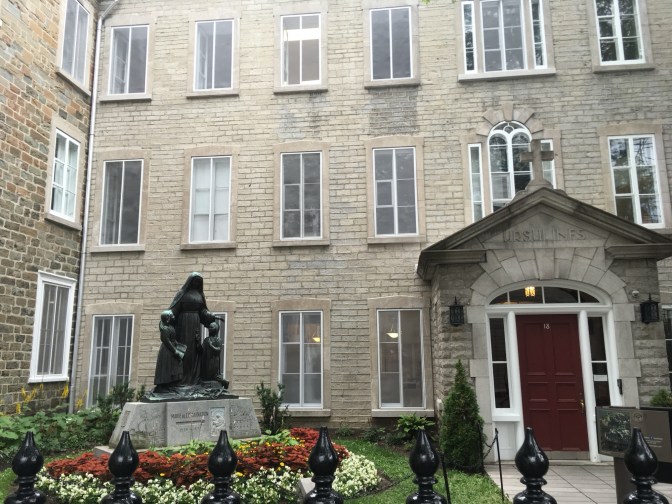
After leaving the Château our guid took us to more of the surrounding historical buildings including Vieux Monastère. ‘The Old Monastery’ is also known as the ‘Augustinian Monastery’ and has held several purposes in the history of Quebec. For 400 years it functioned as a hospital where the Augustinian nuns took care of the physically and mentally ill. Today the hospital has shifted a bit to be a place for those who want a wellness retreat and learn to live a more balanced life. It also holds a museum from its days as a hospital. Located next to it is Pôle Culturel du Monastère des Ursulines, a museum about the Ursuline Nuns, which was also once a Catholic girls school. You will find more religiously significant exhibits here in this museum. We didn’t visit the inside of either, but they would definitely be a great stops to learn more about Quebec’s history as well as its religious history.
Cathedral of the Holy Trinity
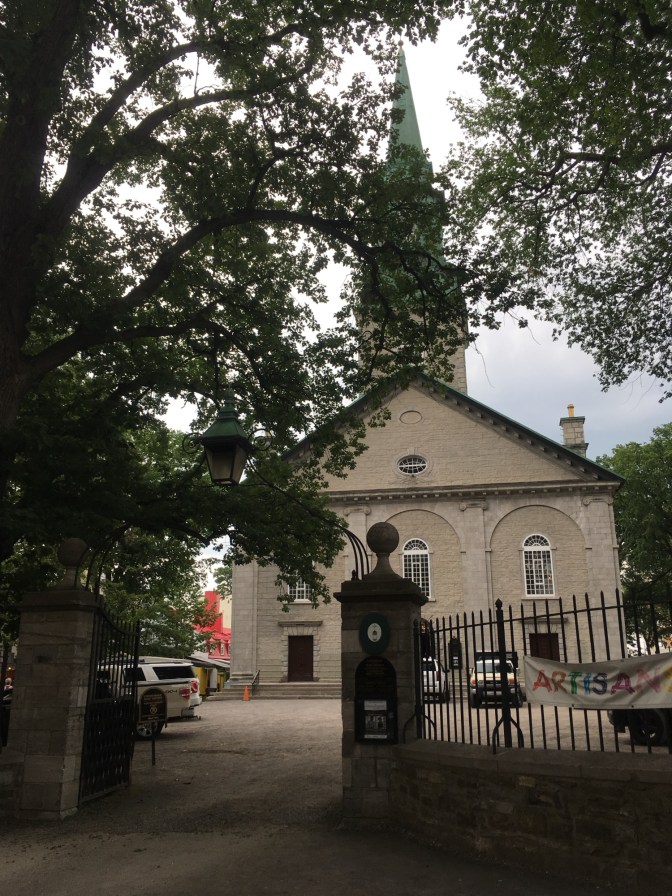
Where as Notre-Dame is a catholic cathedral built by the French Catholics, Holy Trinity is an anglican cathedral built by the Protestant British when they gained control of Quebec and Canada. Just like Notre-Dame it has a lot of characteristics that make it special and unique. It was the first Anglican Church built outside of Great Britain. Today it is an active parish and holds organ and other concerts. It doesn’t have the same grandeur as Notre-Dame since it was built about a couple hundred years later in the early 1800s, but it still is an interesting place to visit to see the legacy of Quebec’s history.
Hôtel de Ville

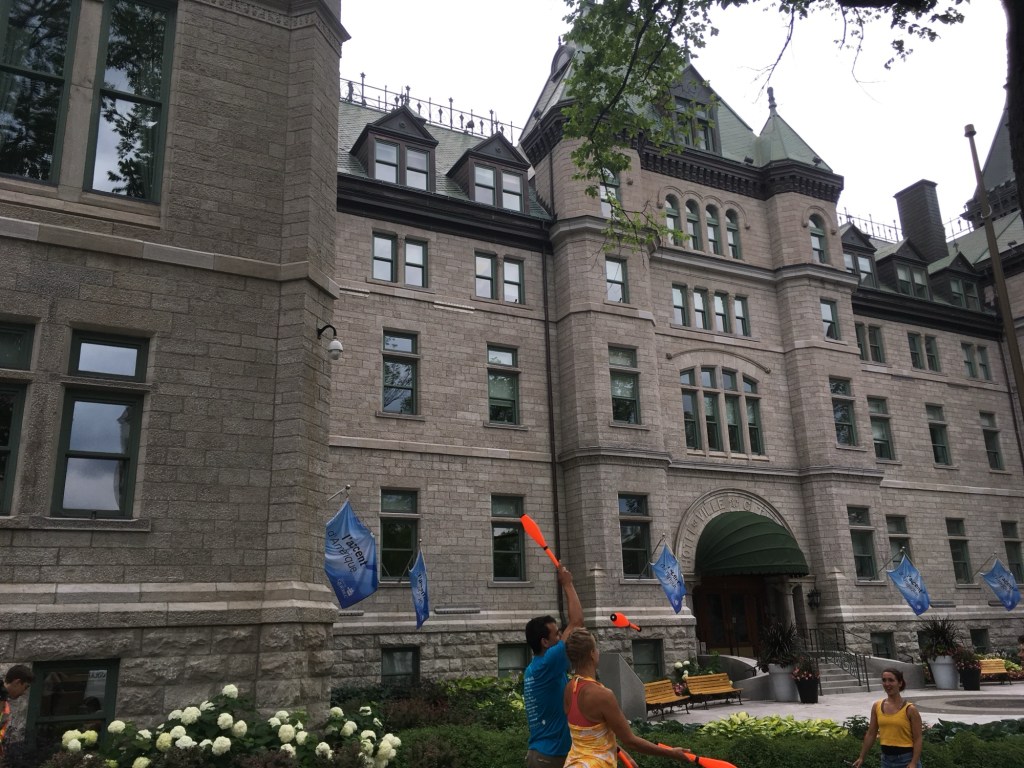
This next stop on our tour may sound like a luxurious place to stay in the city, but it is actually the City Hall. Surrounding it you will find the gardens where the locals hang out and enjoy the nice weather. Many of the historical sites in the city date back to early French conquest of Canada in the late 1600s but this building was not one of them. Before it was built in the late 1800s it was the site of a Jesuit college, that was ultimately demolished. This was built to as a permanent site for the local government as it had changed sites multiple times from other buildings to even the homes of certain officials. Luckily the building was built in a style that would match the rest of the historical buildings.
Séminaire de Québec

A bit hidden from the street, our guide took us into the courtyard of the oldest educational institution in Canada. This is the French name for the Seminary of Quebec that was founded in 1663 by the first bishop of the catholic churches in New France (the french colony of Quebec), François de Laval, whose tomb now lies in the Cathedral of Notre-Dame. For those who may be unfamiliar with seminaries, it is the institution where men can become priests and grow in their faith. For this reason we did not explore the inside but we admired the huge white buildings from the courtyard and listened as our guide explained the history.
Funiculaire du Vieux-Québec and Observation Deck

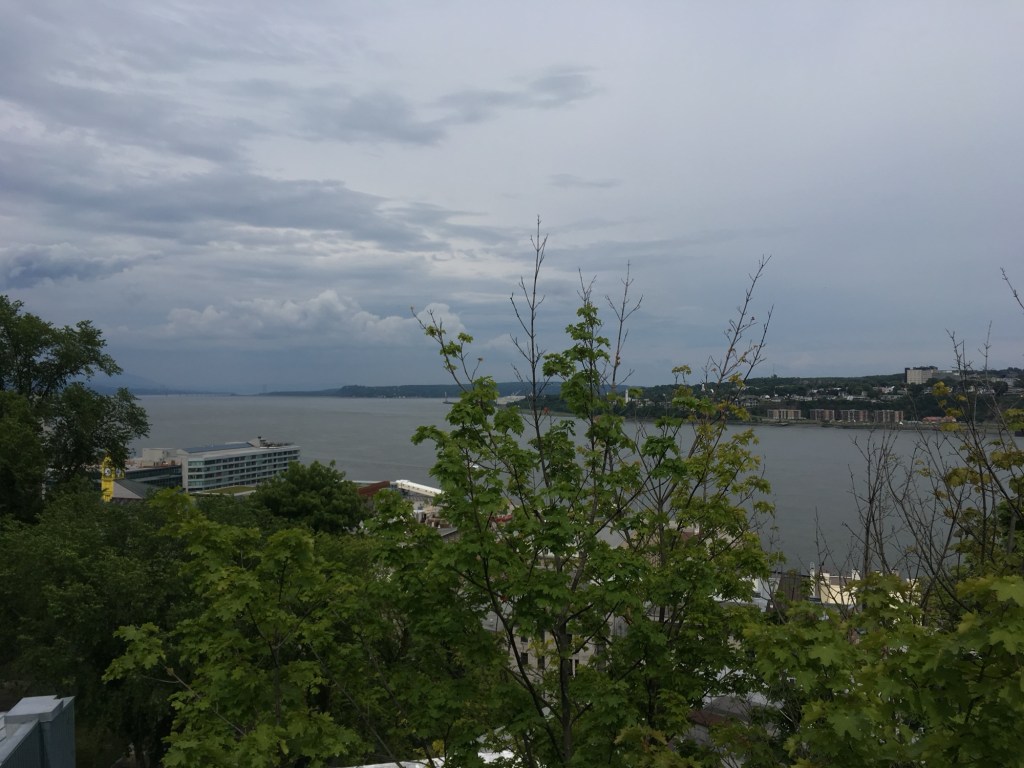
Our last top after touring the historical buildings of Quebec and before heading down to the scenic part of the city was at the funicular that is located at the end of Dufferin Terrace. Here we had a great view of the Lawerence River. Just around the corner is the staircase that leads to the lower city, but you can also take the funicular down here. We did not take it as it was not a part of our tour, but we could admire those who did. It is worth taking the stairs though because you really get an amazing view. If you do choose to take the funicular, it runs from 9 am to 9 pm everyday.
Rue Sous-le-Fort


Now we have made it to my favorite part of Quebec City, the Lower City! Rue Sous-le-Fort is the street you arrive at when taking the 17th century staircase, Escalier Cassee-Cou, down. I would argue it is the most scenic and picturesque spot in the city. I just didn’t have the best photography skills at 16 years old. From the stone buildings, hanging shop signs and fairy lights, and the funicular and Chateau Frontenac in the background, you will be in love with the city.
Rue du Petit-Champlain
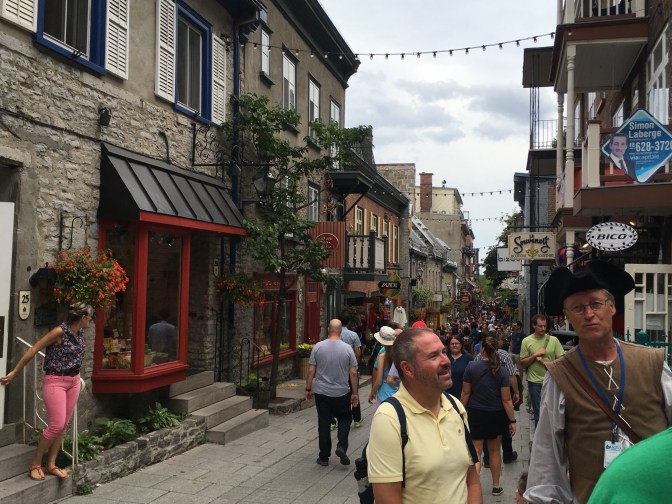
If you turn off Rue Sous-le-Fort you will enter Rue du Petit-Champlain another scenic street in the lower city. You can see our tour guide in this picture dressed like he is a French colonist, which really is fun with this medieval feeling backdrop. Here you will find losts of cute shops and cafes.
Umbrella Alley
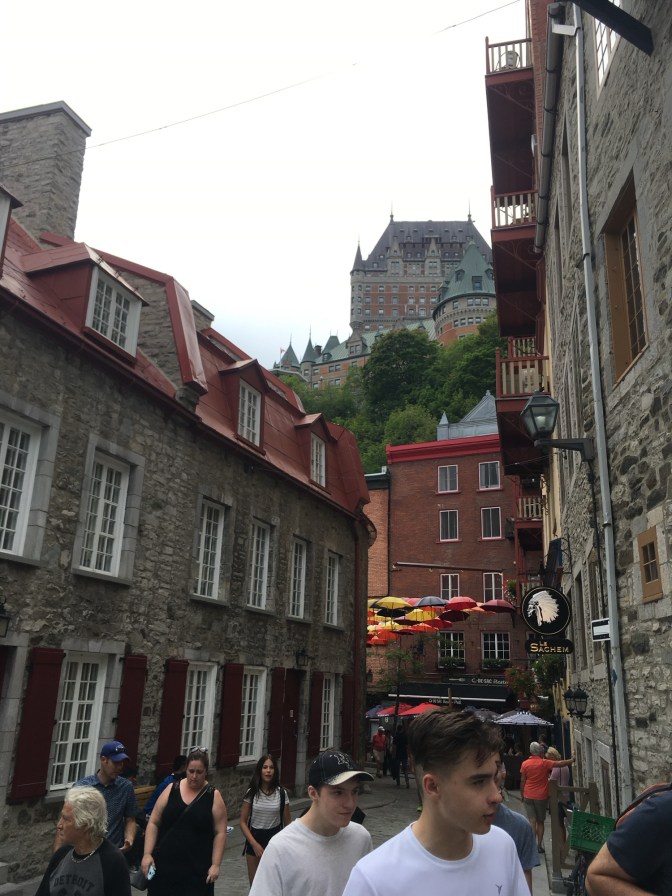
Another turn off of Rue Sous-le-Fort is Umbrella Alley. You can only really see the start of it in this picture, but the star of the show is Château Frontenac towering in the background. I told you that you can see it everywhere in the city! This street itself isn’t quite as pretty as the other two but the umbrellas and the view is what makes it a must see.
Place Royale
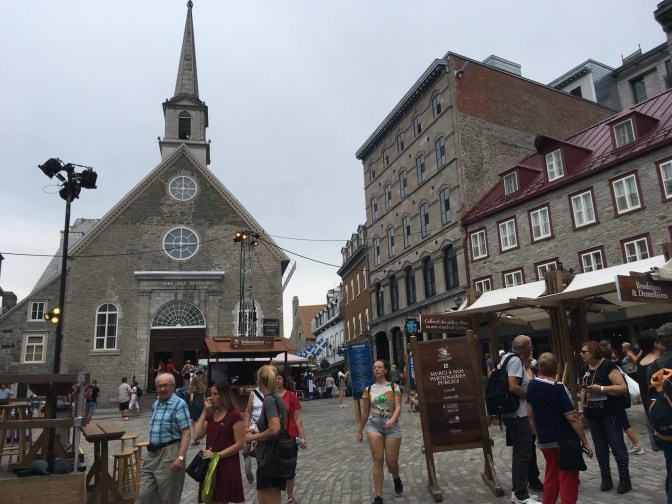
Now this is where our tour guide left us, at Place Royale. It is a beautiful square that served as the market square during its early years as a French colony. The French and British influenced stone buildings that stand here today replaced the wooden ones from its first days as a center of the city. The British style comes from the restorations made after the British damaged the city when taking over where as the French style comes from its French builders. It is a great place to sit in a cafe, people watch, or just soak in the local culture.
And the rest!
After being left by our tour guide we still had a bit of time to explore the city on our own. We saw most of the sites, but this was our chance to get some dinner and do some shopping. I really enjoyed souvenir shopping and buying maple syrup candy. Its so easy to get sucked into the French of it all that you forget you are in Canada. There are so many great Canadian things you can enjoy here from maple syrup to poutine. I wish we had poutine for dinner but instead we went to a burger place that my family claims is the best they have ever been to, but I am not a burger eater so I couldn’t tell you for sure.
For me this whole day was about taking in the French aspects of everything. I was super excited by all the French speaking and signs that I went into this as if I were visiting one of my European countries. Its part of the reason that at 16 I felt like I had grasp on what it means to travel and experience a new culture even though it could be argued that Canada is one of the most similar countries to the United States. I would highly recommend Quebec to avid travel lovers and those who are wanting to venture out of the United States for the first time. It is a great introduction to being surrounded by a foreign language, in a place with a lot of history, and around people who may not think like you. I learned so much from this trip, including you don’t have to go far to learn and experience something new. That is why I love French Canada.
If you haven’t yet please visit my Canada page and read my post from Montreal as well. For now this wraps up my adventures in Canada, but you never know when I might have the urge to visit. I am only 4 hours away from the border!

 The Journal of Wanderlust